11.5%
East Sussex may not be the first place on earth coming to mind when thinking of sparkling wine. And yet winemaker Will Davenport has had a lot of success with sparkling wines made in the classic champagne style since he started out with 5 acres of vineyards in Kent in 1991. I bought this wine from a wine bar/shop in South London that specialises in English and natural/organic wines - the Davenport sparkler happens to be both. The Limney Estate wine is made from 49% Pinot Noir and 51% Auxerrois and has been aged on lees for over 2 years, which seemed to make it an ideal candidate for a blind tasting against a German sparkler. [read the full post...]
One of the less exciting things about living in London is not having a cellar. I sometimes feel a certain envy towards friends on the continent who 'of course' have a cellar and can put age-worthy wines away for a few years or even decades. So whenever I can get my hands on an aged wine I get pretty excited. Quality Riesling, particularly the sweeter ones, can age very well, but if you buy a twenty year old one it is always a gamble. Luckily, I got this one directly from the winery, so I was fairly certain it had been stored properly. Ladies and gentlemen, I present a good ol' boys Riesling from the Moselle:

Lime, peach, mineral, herbs, peach, lime, good acidity - I do actually feel a little sorry for using these words here over and over again. But what can I do, these German Rieslings are just very good at delivering that - and the 2008 dry Riesling from the Emrich-Schönleber winery is no exception. In fact, it is a good example for a dry, crisp and fresh wine of this type that also comes at a reasonable price (especially if you take into consideration that it comes from one of Germany's most prestigious wineries).

When the Wine Rambler committee assembles in Munich, we often send two evenly matched wines into a blind tasting battle. Last weekend was no exception and two formidable contestants were preparing themselves for the main event. To get us in the right mood for this epic battle, a good supporting act was needed. So I brought along a mystery wine. It was pretty obvious that the properly wrapped wine was a rosé, but little did my co-ramblers know that it was from the County of Kent. However, I too was in for a surprise - little did I know that this support-act blind tasting would turn into a triumph for English wine (to be followed by a defeat for German winemaking, but that is another story).

After having tried a few English Bacchus-based wines I was curious to see what I would make of a German representative of this varietal (Bacchus was, after all, created in Germany). However, it is not that easy as Bacchus is not very popular in Germany. It is mostly blended into cheaper wines and not really a varietal wine connoisseurs think of a lot, which is probably why none of my online wine merchants sell it. So I was quiet pleased when, while visiting Munich and food shopping for a Wine Rambler committee meeting, I came across a Bacchus in a similar price range to the English ones I had tried. Little did I know what disappointment would lie ahead.

An English wine? Yes, very much so. One of the Wine Rambler's wine resolutions for 2010 is to explore the subject of English wine, and report back here. Today, that mission (virtually) leads me to Oxfordshire, specifically to Wallingford, about eight miles from Oxford, where Bob and Carol Nielsen planted 14 acres of wine in 1988. Today, Brightwell Vineyard make five different wines, including a rosé, a red (mostly made from Dornfelder) and a sparkling Chardonnay. They have won several prices for their wines and the 2007 Bacchus was awarded the Silver Medal in the 'Wine of the Year Competition' of the UK Vineyards Association.

One day it will become summer again. And when that happens you will want to drink a wine like this one here - or at least you should. The aptly named 'Sommer Cuvée' ('Sommer' being German for 'summer') is one of the basic wines of the Salwey winery. They make it from 95% Silvaner and 5% Riesling, two grapes the Wine Rambler loves. Together, they produce a light and fresh wine that is just a pleasure to drink.

Oregon is bad. Stop it if you can. Here it comes. Here it comes. Now it's after you. Flee to some place new. Run away. Run away. - For the Wine Rambler it was too late. Oregon got me. And if you want to find out how it all happened and what this has to do do with one half of a team of almost-giants, well, then it got you too. Don't be afraid, though, it will all be revealed. And make sense. Sort of. Either way, there will be wine!

When you see one of the Knipser brothers behind a table at a tasting, good-naturedly chatting with his customers while stoically pouring glasses for the thickening throng, there is nothing to suggest he might be anything more than another ruddy-cheeked wine grower from the Pfalz. And yet, the Knipser estate is arguably germany's most accomplished winery, in that they overachieve so consistently in every category and style - white and red, heavy and light, sweet and dry.
This one is light and dry, and, surprise surprise, perfectly made: Wonderful fresh acidity, clean, fragrant, slightly exotic Riesling fruit (think grapefruit and passion fruit), lean structure, light on the alcohol. Not deeply mineral or complex, but so flawlessly made it's a joy to drink.
It has been a while since I had my last English wine; so far my exploration of local produce has had mixed results, but then I have never systematically looked into English wine. Denbies is an estate that is hard to overlook though, seeing as they are the largest largest single estate vineyard in the UK. Located near Dorking in Surrey, the winery makes a lot of the fact that the North Downs have the same soil-chalk structure as the Champagne. The Surrey Gold, however, that we opened yesterday, is not a sparkling, but rather a "deliciously fragrant off dry wine [that] is rich in fruit and floral aromas with subtle hints of spice and a crisp finish", as the label informs us. [read the full post...]
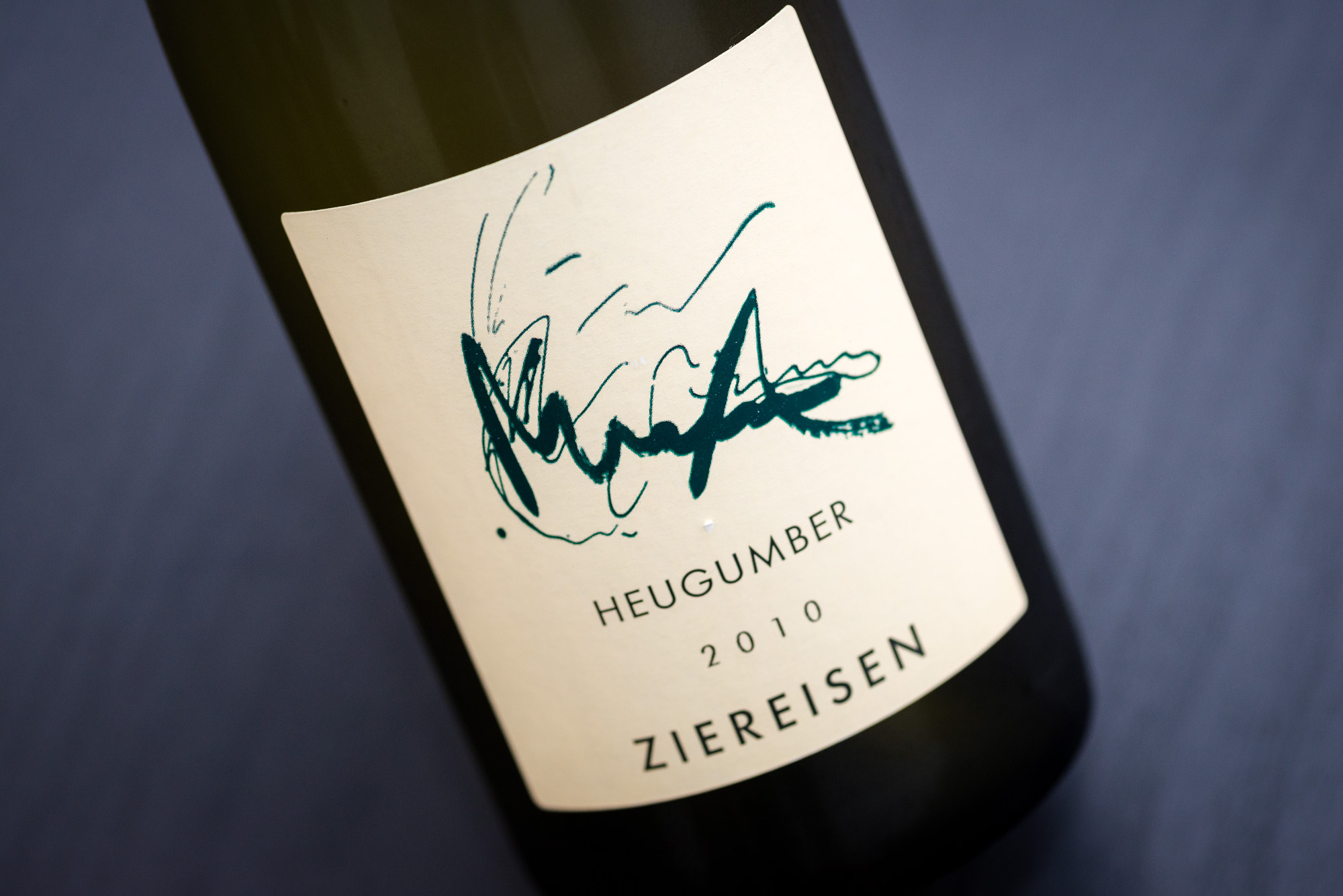
People have very different ideas about wine labels, including people in wineries, of course, and that must be a good thing as it creates a certain variety. The artist-designed label of this year's GrüVe is certainly very distinctive, although I cannot say that I like the way in which it overpowers the whole bottle to the point that you see nothing else. But that just is the tradition of the Sonnhof estate's GrüVe label, an entry level Austrian Grüner Veltliner from one of Austria's premier wineries.
Dark straw colour.
A nose of candied lemon and orange peel, with slate minerality and a tiny bit of vegetal roughness.
Candied lemon peel and "slate" are also prominent in the taste, with a hint of bitterness on the finish.
This very enjoyable Riesling from an up-and-coming producer ranges between the the lighter "traditional" mosel off-dry style and the more opulent and creamy "harmonic dry" created by the likes of Reinhard Löwenstein, Van Volxem and Clemens Busch. Not a bad place to be.
A nose of mineral, citrusy acidity and tobacco welcome you when you pour this Riesling from the Palatinate into a glass. Add some herbs and peach and you get a really pleasant nose that is fresh, crisp and light at the same time. The Riesling is quite similar on your tongue too, light and fresh with notable acidity and some slightly bitter vegetable elements that are a nice balance to the juiciness and, yes!, the tobacco. This organic wine seems quite light at first, but can also show some teeth. Enjoyable and fresh, with quite interesting tobacco notes, the Christmann wine is a pleasant companion, but also not quite a revelation - with a little more substance it could have been though. A decent showing for the price.
The very discreet notes of tobacco in the nose of this wine went almost unnoticed when I opened the bottle yesterday to go with a raspberry desert - but that was simply because of the quite intense raspberry smell dominating the table. Despite the fruity dessert we could easily pick up apple, peach and herbs, embedded in a fresh, mineral creaminess. A very pleasant nose coming from this 'feinherb' (=off-dry with perhaps a bit more acidity) Mosel Riesling - and a very good reflection of the sensation awaiting your taste buds. The apple is perhaps a bit more dominant on the tongue than the nose; the Riesling manages to be both smooth and a little rough (in terms of acidity think more vegetable/apple than citrus fruit) with firm minerality, good structure and a nice finish.
Nice yellow colour and even nicer mineral in the nose; also notes of vegetable, citrus fruit and peach. The nose is not very intense, but quite pleasant. Pleasant is also a key word for my palate reaction to this wine. Mineral, a bit of candied peach with nice, almost creamy mineral and well integrated fresh acidity. [read the full post...]