TheWineRambler "A German wine label is one of the things life's too short for" - Kingsley Amis


Baden

Warm region in the very southwest of Germany - among others, great rich pinots, both white and red.
Posted by Julian 18 Nov 2011

Said Mr. Munich Wine Rambler to a bottle of Lake Constance Chardonnay: "There's nuthin' in this town 's been a surprise, 'cept for you". Oh no, wait, that wasn't me, that was Kevin Costner, the romantic free-grazing, sharp-shooting cowboy in "Open Range", to Annette Bening. But that was exactly my sentiment when I took the first sniff of this 08 offering, my last bottle (for the time being) from the Staatsweingut Meersburg.

After a long, joyless day, any glass of wine would have cheered me up, and I wasn't expecting anything special, really. A white that would work with the nice pumpkin soup set before me, not too acidic, not too thin, with some smooth buttery notes (yes, it had indeed been that kind of day). But as it happens, this eloquent, outstandingly matured Chardonnay surprised and charmed me far beyond my modest designs:

Posted by Julian 28 Sep 2011

Growers' cooperatives, revisited. When we last mentioned them, we tried to be fair-minded and also point out their good and useful side, but ended up somewhat doubtful that particularly interesting wines could come out of them. Well, that only goes to show that the best of us sometimes have to eat our words, for the good wine growing people of Hagnau, a beautiful place on the Lake Constance shore, may have proved us wrong with a bottle of Pinot Blanc from their Burgstall vineyard.

Not up to our usual photography standard, I know. But the wine was up to scratch.Not up to our usual photography standard, I know. But the wine was up to scratch.

Posted by Julian 23 May 2011

Those of you who have ever followed up on our coverage under the no other place-tag know that we have a special thing for out-of-the-way wine growing regions. But that doesn't mean that we want people to judge these wines more benevolently because of the originality or their provenance, nor do we. What we want is emphatically both regionalism *and* quality in wine.

Staatsweingut Meersburg, owned by my beloved home state of Baden-Württemberg, has certainly delivered before on publicly guaranteed wine quality. And they also own Germany's highest elevated vineyard, the Hohentwiel Olgaberg. Named, improbably, in honour of Olga Nikolajewna Romanowa (1822-1892),a Russian princess and later queen of the kingdom of Württemberg [1], it covers the hillside of one of the cone-shaped former volcanoes of the Hegau - a landscape of great beauty and distinctiveness that slopes from the edge of the black forest down to the lake constance basin, but has not so far been able to boast of any wine growing credentials whatsoever.

Posted by Sabine 01 Apr 2011

Time for another drive-by-shooting of the Lake Constance vineyard that just happens to be the old stopping-place between home and the grandparents' place. So same place, same photographer. This time with a bit more of a wintry feeling, but also scattered signs of approaching spring.

Posted by Julian 11 Mar 2011

Our regular readers know that we think highly of Baden's southernmost subregion, the Markgräflerland, have enjoyed its original Gutedels and serious Pinots, and count on it to make its name in the international wine world fairly soon. You also know that we have explored the world of german sparkling wines with growing enthusiasm.

If we put those two together, what do we get? We get this all-organic sparkler from the (as yet) little-known Harteneck winery of Schliengen, halfway between Freiburg and Basel.

Posted by Torsten 04 Mar 2011

As far as aged wines go, eight years may not seem seriously old, but Pinot Blanc, especially from Germany, tends to be drunk as a younger wine, light and fresh in style. Having said that, some German wineries also produce more substantial Weißburgunder (German for Pinot Blanc), matured in oak barrels, that can and should age a few years. Dr. Heger is one of those wineries, located in the Kaiserstuhl, the warmest wine growing area in Germany with fantastic volcanic soil.

The dry Auslese from the Winklerberg vineyard is one of those more substantial Pinot Blancs. The colour shows the wine's age, an intense honey coloured gold that promises substance and maturity.

Posted by Julian 20 Feb 2011

Straw-coloured, with a nose of ripe pears, candied fruit and beeswax, this wine is dominated by the tension between the oak flavours on the one hand and the very robust acidity on the other.

The focus of the fruit seems to get lost a bit between the two, resulting in a somewhat muddied palate and a slightly awkward kind of complexity. Still, a very decent and somewhat original white.

Posted by Julian 20 Feb 2011

A while ago, I attended one of the commercial wine fairs that hit downtown Munich a couple of times a year. Like the times before, the elitist in me wasn't sure if it would be worth the time, because, to be completely honest, there are many second- and third-rank producers at these gatherings. In the end though, that is precisely why I eventually did go and had a look around. What is going on among the rank-and-file wineries is, I find, more indicative of the wider trends and directions the wine world is taking than the elite estates, who are in a league of their own anyway and always march to their own beat to some extent.

While braving the dense throngs of tasters - these events are notoriously busy - , browsing the winery leaflets and tasting the odd glass, I chanced upon the Kalkbödele winery of Baden's Tuniberg region, and was persuaded to try both their Grauburgunder and their Pinot Gris. Yes, that's right, two versions of the same grape. The naming, I was informed, indeed indicates the two different styles that they were aiming for. What was going on here?

Posted by Julian 20 Feb 2011

A wine with prominent acidity that is worked straightforwardly into a light, simply, but well structured wine. Here, green apple and unripe melon rule the day, with clear, if not endlessly deep fruit on the palate. In its acidity-driven straightforwardness, this is reminiscent of a good Pfalz Riesling, without quite managing the minerality part. I prefer this latter version at this moment in time, because it seemed more refreshing and drinkable to me and for the completely subjective reason that it works wonderfully with a supermarket food favourite of mine, Flammkuchen.

Covered, with more background information, in our posting on Baden's Tuniberg and wider trends in german wine.

Posted by Torsten 26 Jan 2011

A couple of weeks ago when I drafted the wine review below and scheduled it for publication today I had no idea that it would, for very sad reasons, be rather timely. It is a review of a great wine from Baden that faded away too early. And just as I have published it I hear the sad news that a great man from Baden has also passed away way too early. Wolf-Dietrich Salwey, vintner, winemaker and ambassador for high quality Pinot from Baden was killed in a car accident yesterday.

Wolf-Dietrich Salwey, image by Salwey wineryWolf-Dietrich Salwey, image by Salwey winery

Posted by Torsten 26 Jan 2011

Pinot Gris is a funny thing. If it is called Pinot Grigio it comes from Italy, is meant to be drunk young and suffers from too much cheap plonk on the market. If it has Pinot Gris on the label it is probably from Alsace and may be a substantial wine with the potential to age well. When it is called Grauburgunder it comes from Germany and could fall into any of these categories. The wine you see below comes from a reliable, quality focussed producer and has been matured in oak barrels - so you'd think even when stored in my wardrobe (officially London's most delicious wardrobe) it should be at its prime now. But then there is always a risk, are we looking at a wine that's already faded?

Posted by Julian 20 Jan 2011

It's been a while since we last talked Pinot Blanc. So gather round me, friends: Pinot Blancs's reputation is generally lacklustre. In Burgundy, it's rather like Stephen Baldwin to Chardonnay's Alec - the younger brother who doesn't quite have the talent and will always be outshone. Mostly though, it is because international drinkers get their Pinot Blanc bearings from Alsace and Northern Italy, where results are often very drinkable, but ultimately rather bland, that Pinot Blanc is still underrated. In Germany, though, where it makes for about 3.5% of vines planted, it can be granted great growth status when grown in the best vineyards, and can indeed turn out distinctive and quite majestic wines. When we last checked in with one of the country's very best Pinot Blanc producers, the Bercher family of Baden's Kaiserstuhl subregion, we were confronted with rather too majestic a specimen: The 2004 great growth dry Spätlese. Impressive for its power, but pulled out of balance by high alcohol content, was our verdict back then.

Well, I'm most happy to report back to you on a younger version of the same wine:

Posted by Torsten 13 Dec 2010

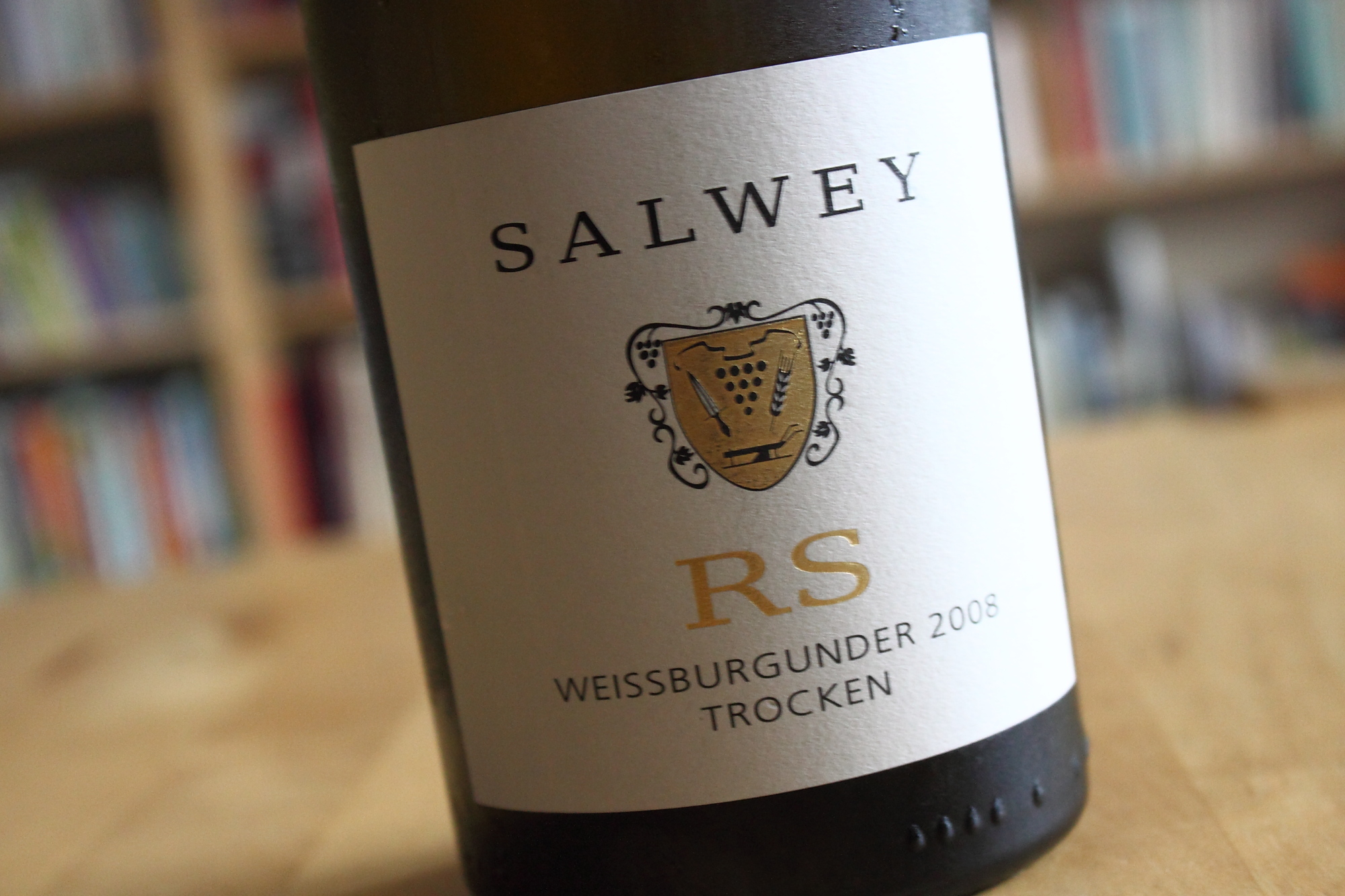
Weißherbst, literally 'white autumn', is a special German style of rosé. Basically, it involves red grapes done in white wine style, but the grapes can only be of one variety. The grapes do also have to be sourced from the same area. In the case of the Salwey RS wines - Reserve Salwey - they do actually come from the same vineyard and are of late harvest quality.

The Salwey Weißherbst comes from sun-kissed Baden, and it has been matured in oak barrels. I did not tell that to my friends who tasted it blind, which resulted in an interesting description of the wine's bouquet - that it was a rosé they could clearly see, of course.

Posted by Sabine 07 Nov 2010

Here are some pictures taken during a recent vineyard stroll between Meersburg and Hagnau on the Lake Constance shore, revisiting old Wine Rambler territory along the way. It was as serene as you can see, except for eerie fake bird-of-prey calls and canon shot that went off every couple of minutes to scare away any birds interested in sampling Spätlese grapes - it was either that, or a bit of private artillery practice.

pear tree, vines, and kitschy autumn sunlight near the Aufricht winerypear tree, vines, and kitschy autumn sunlight near the Aufricht winery

Posted by Julian 17 Oct 2010

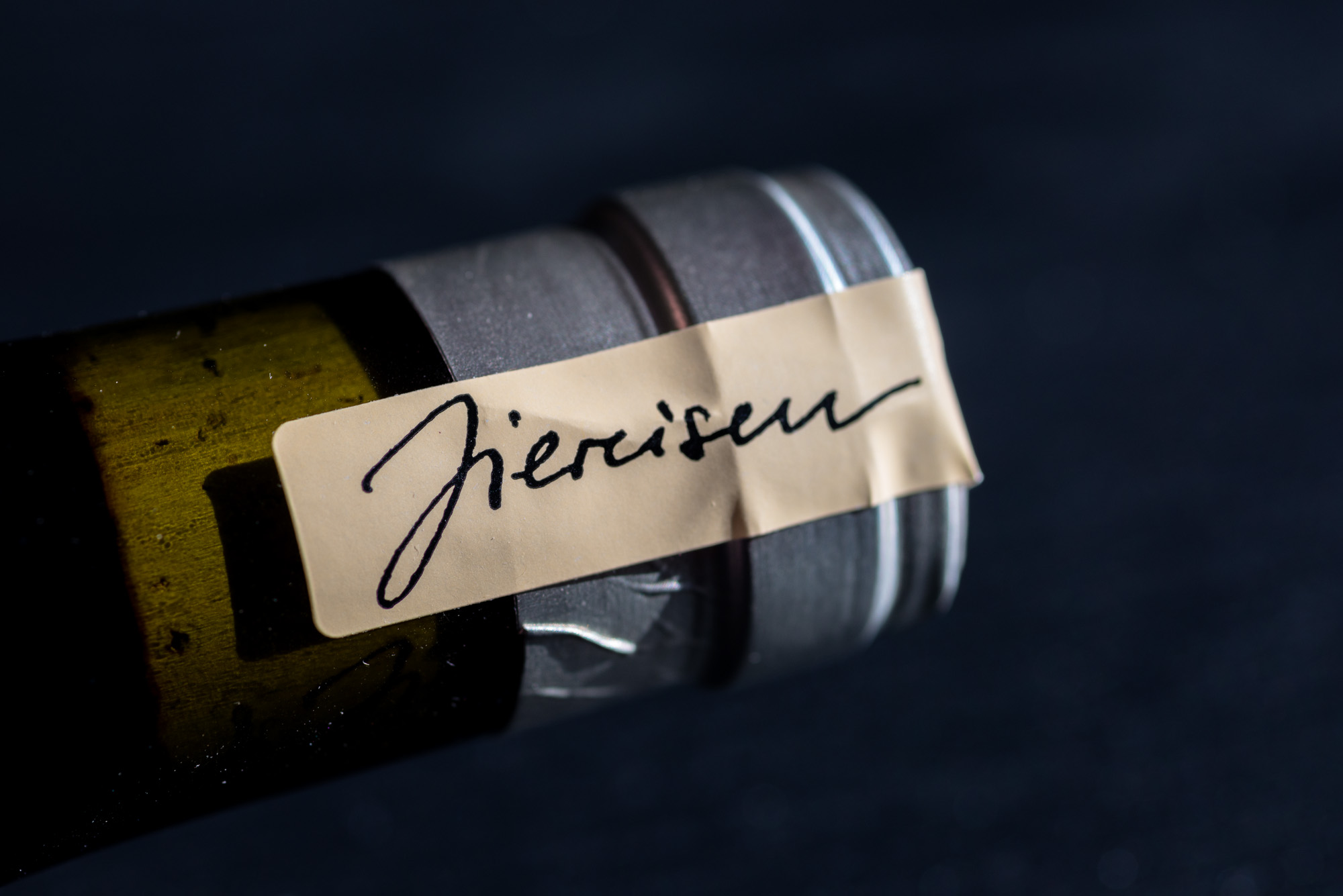
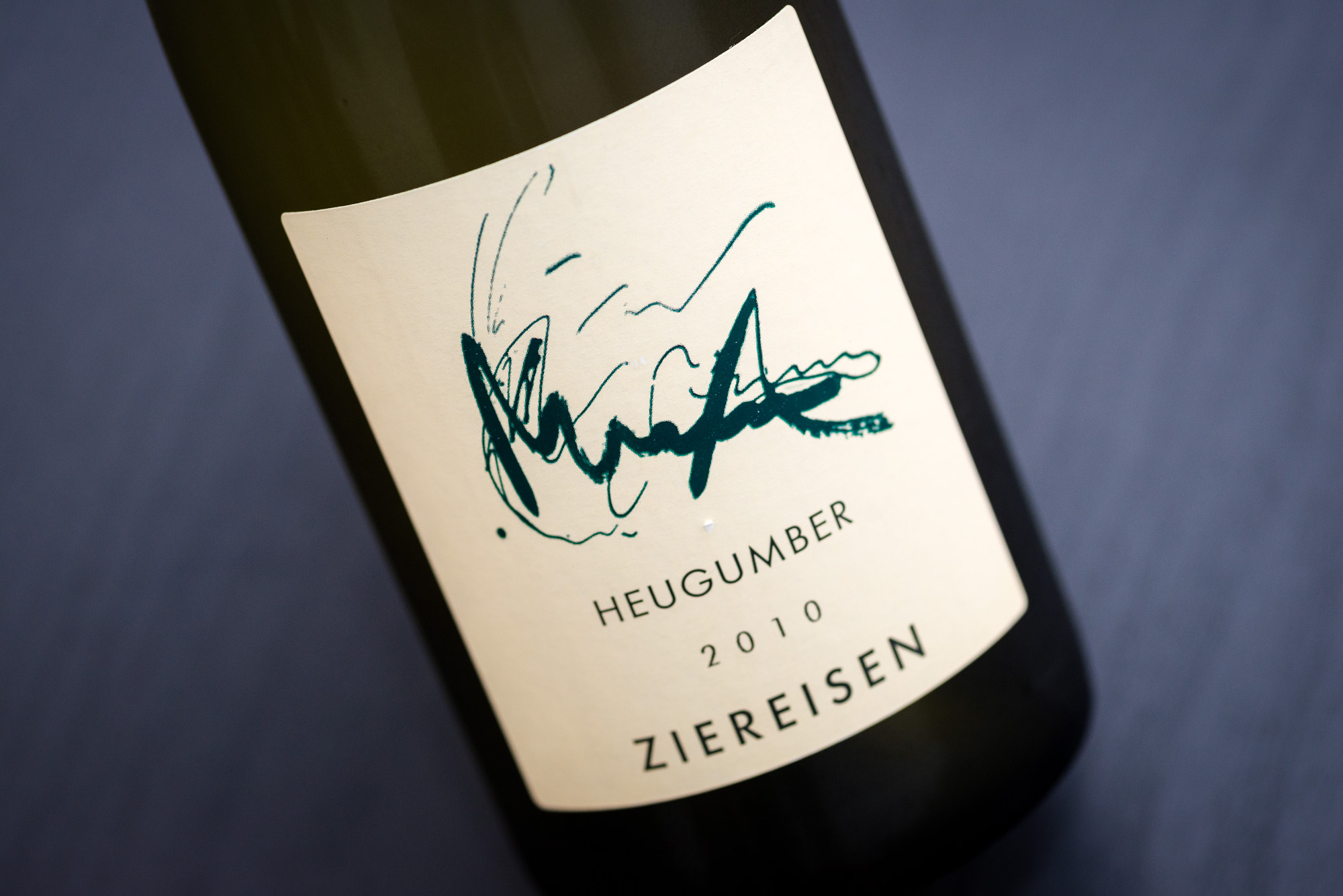
Ziereisen time here at the Wine Rambler, and with that, a kind of follow-up on the theme of food friendly wines raised by the Wine Rambler's very recent report on Long Island wine growing. While Hanspeter Ziereisen's reputation was largely made by the massive and impressive 03 and 04 vintages, it is not as well known that he has since changed his style completely. Bored by what he came to see as the overconcentration and vacuousness of the "big red"- style he was then aiming for, he decided he would henceforth make the Pinot that he himself likes: Lithe, drinkable, and yes: food friendly. Avantgarde burgundian. In fact, judging by the wine under review, it's not much of an exaggeration to call Ziereisen a one-man french revolution in german Pinot.

Posted by Julian 19 Sep 2010

Nice try, Reichsgraf zu Hoensbroech, but you cannot fool the ever-alert Wine Rambler! We know that your whimsically named "Blauer Limberger" is no other grape than Lemberger, known in Austria as - say it with me - Blaufränkisch. In Germany, Lemberger has its home in Württemberg, to which the Reichsgraf's Baden sub-region of Kraichgau is very close.

Posted by Torsten 09 Sep 2010

And yet again I am drinking a Pinot from sun-kissed Baden; this time it is a Pinot Blanc, known in Germany as Weißburgunder (=white Burgundy). As I have written a lot about the producer, the Salwey family recently, I will keep this introduction short and jump right into the wine:

The bouquet is a mixture of melon and apple - Bramley apple, in particular -, with earthy mineral, soft notes of hand lotion and, surprisingly, the faintest hint of petrol. Light, smooth and enticing.

Posted by Julian 07 Sep 2010

Despite being as egalitarian and anti-aristocratic in outlook as any wine blog, you will from time to time find the Wine Rambler taking a keen interest in one of Germany's nobleman winemakers.
There are good reasons for that: First of all, while being able to trace your forefathers back through a few centuries of high politics and lordly splendour certainly doesn't make you a better winemaker (or a better man, for that matter), it does often provide us historian Ramblers the kind of background story we enjoy. Secondly, in the spirit of our site's motto, we take cruel pleasure in the phonetic challenge german wine labels confront our readers with, and we believe we have found a little gem here: If Reichsgraf zu Hoensbroech doesn't leave a trail of destruction across anglo-saxon larynxes, we will be disappointed indeed. With our Reichsgraf here specifically, there is a third reason:

Posted by Torsten 31 Aug 2010

It is Silvaner time again at the Wine Rambler. We have been championing this underrated (or rather unknown) variety for a while now, and even though we have not exactly changed the wine world, we will not shut up either. If you have heard of Silvaner (also known as 'Grüner Silvaner' or 'Sylvaner'), they may have told you that it is a very food friendly wine and a little neutral. While we encountered many seriously food friendly Silvaners, we have yet to find a bland one. We did, however, find some that can party with some of the best white wines in the world, and others that effortlessly age 25 years. The Silvaner that graced the humble Wine Rambler's table the other day was neither old nor did it claim to be a world class wine. It was, however, unfiltered, and that alone seemed to make it worth an investigation.