TheWineRambler "A German wine label is one of the things life's too short for" - Kingsley Amis


Mosel

The world's finest fruity Rieslings from steep, slate-covered hillsides
Posted by Julian 12 Oct 2011

My fellow Wine Rambler Torsten has instructed me to stick to this blog's core concern, which is German wine, and also to be on my general best behaviour, because a few more winemakers, fellow bloggers and wine business people may look in here these days. Maybe even, nudge nudge, a couple of German wine queens. As to why that is, that will be duly revealed, much to my intense envy, in a few days' time. In the meantime, no Bordeaux, no ill-fated Burgundy projects and no wines dug out of the trash bin.

Instead, if it please your majesties, a German classic:

Posted by Torsten 24 Sep 2011

Willi Schaefer is one of the stars of the Mosel, so much so it seems that he and his son Christoph even in 2011 think they don't need a website so that people can find out about them. Well, they are on our radar anyway, but I am sure others would appreciate the chance to learn more about this small, family-owned estate in Graach. The wine you see in front of you is one of the basic offerings, a "feinherb" or "off-dry" Riesling that comes with a screw cap.

When I recently had two wine loving friends visiting, I pitted the Schaeffer against an off-dry Australian Riesling in another epic Wine Rambler blind tasting battle.

Posted by Julian 17 Aug 2011

After all the excitement of wines dug out of the garbage and superbly aged supermarket plonk (whatever next?), dare we even bother you with a simple Kabinett from the Mosel, a sweet young thing from the slopes of Erden? We do indeed and, in all modesty, I think we may have found a minor classic for you.

One to even hide away now, maybe, and in ten years' time, follow our example and write your own semi-informed little piece on what you dug out of your cellar, wardrobe or customised wine storage appliance?

Posted by Torsten 16 Aug 2011

I concluded my recent exploration of the ageing potential of cheap German plonk with a reference to what is a, well, reference point for white wine that often has to age before being at its most enjoyable: a Mosel Auslese. Ideally, these Rieslings have two key ingredients for ageing well - sugar and acidity. A good Auslese can easily improve for a decade and will often last much longer than that.

This means that the 2007 Auslese from Mosel producer St. Urbans-Hof could still be considered a youngling. On the other hand the wine has been living in my wardrobe since I bought it at the winery in 2008 (for €24), hardly the best place to age slowly, and who says you cannot enjoy an Auslese when it is still young?

Posted by Torsten 11 Aug 2011

This wine is one of two bottles that found their way to me under somewhat mysterious circumstances. As I have covered this elsewhere, let's for the moment focus more on the "what" than on the "how". And that in itself makes for an interesting case. As is common knowledge (even among non-wine drinkers) wine ages. Now, for most wines that just means a constant progression to a state of vinegar. Some will age for a few years without problem, but only a few do improve with ageing. And even among those thirty years is a respectable age.

It would be even more respectable for a wine that back in the day cannot have been very expensive and may very well have been relatively cheap, mass-produced as this blend of unspecified grape varieties from the Mosel. Is it actually still drinkable?

Posted by Julian 24 Jul 2011

I'm always honoured when people who have stumbled onto this blog contact us for expertise on German wine, even while I find myself guiltily hoping that we are not the only source that they rely on, given the patchiness and dabbling character of this our whole undertaking. But here is a piece of advice that I guarantee you will not regret following: When looking for mature-ish Mosel Riesling in great drinking condition, look no further than the 2002 vintage, underrated in many quarters, but in my humble experience as safe a bet for lively, nuanced wines as you are going to find.

Martin Müllen's 2002 Kabinett from the aptly named Paradies ("paradise") vineyard is a case in point. Over and beyond being a minor classic of the neo-traditional style of Mosel winemaking (whatever the hell that is supposed to be), it also has a long and distinguished history in this Wine Rambler's cellar, being one of the very first wines ordered directly from the producer. And I'm happy to report it has never before tasted this good:

Posted by Torsten 21 Jul 2011

One of the pleasures of living in London is the vibrant wine trade and more wine-related activities going on than a Wine Rambler can participate in. I try to cover what happens in German wine though, and so earlier this month I set out to a Mosel-Saar-Ruwer tasting in the Great Hall at One Great George Street in Westminster. I had visited this fantastic location previously, for instance for the recent English Wine Producers tasting.

On 4th July it was not English but German wine in my glass, and from Germany's most famous wine region - a chance to try some of the off-dry and sweet Riesling from the 2010 vintage. And to be presented with an apple, the most unusual tasting gift so far.

Posted by Torsten 20 Jun 2011

Looking back over the last few weeks of wine rambling, I realise it has been a little while since we have reviewed a dry Riesling. As certain standards need to be upheld (and the world reminded that Germany defines itself more and more about dry), a bottle of dry German Riesling was uncovered from my wardrobe cellar.

As it happens, it was a dry Mosel Riesling, made by winemaker revolutionary Reinhard Löwenstein.

Posted by Julian 07 Jun 2011

The Schloss Lieser estate, dear readers, is the one winery that has had more of their bottles consumed chez Mr. Munich Wine Rambler than any other I've never told you about (except very briefly here). Admittedly, this also involves an order I placed twice in considerable confusion, but mostly, it is because Ute and Thomas Haag have been offering arguably the most consistent value in fruity and sweet Riesling for the last seven or eight years. Thomas Haag is known to Mosel afficionados as the son of Wilhelm Haag from the Fritz Haag estate, wine being a family affair in that part of the country. The 2005 Kabinett from the iconic Brauneberger Juffer Sonnenuhr vineyard was the first of their wines I ever got to taste, four or five years ago.

So how has it been holding up?

Posted by Torsten 28 May 2011

Even Wine Ramblers do have a birthday. Just recently, it was the birthday of THE Wine Rambler and also of my co-Rambler Julian. My birthday is already a few months past, but there is still something to report on: When I met our Munich branch as part of my birthday celebrations, I found myself presented with a special gift.

Co-Rambler Julian likes to hunt for aged wines on eBay (great if you are in Germany, imppossile in the UK because of legal restrictions), and for my birthday he managed to find a bottle of a suitably aged Riesling from a Mosel winery that has my personal seal of approval.

Posted by Torsten 04 May 2011

"Gold, gold, gold - molten gold flowing into our glasses." That was the impression Markus Molitor's late harvest Riesling had left when I first tried it in the summer of 2008. Now, opening my last bottle, I had the same, most pleasant sensation, just enhanced with a little more wisdom of age (the wine I mean, certainly not me).

Late harvest (Spätlese) Riesling from the Mosel to me is one of the most exciting manifestations of wine, ideally light, elegant, full of character and with the right dosage of residual sugar to tempt you for yet another glass without cloying you with too much sweetness.

Posted by Julian 01 May 2011

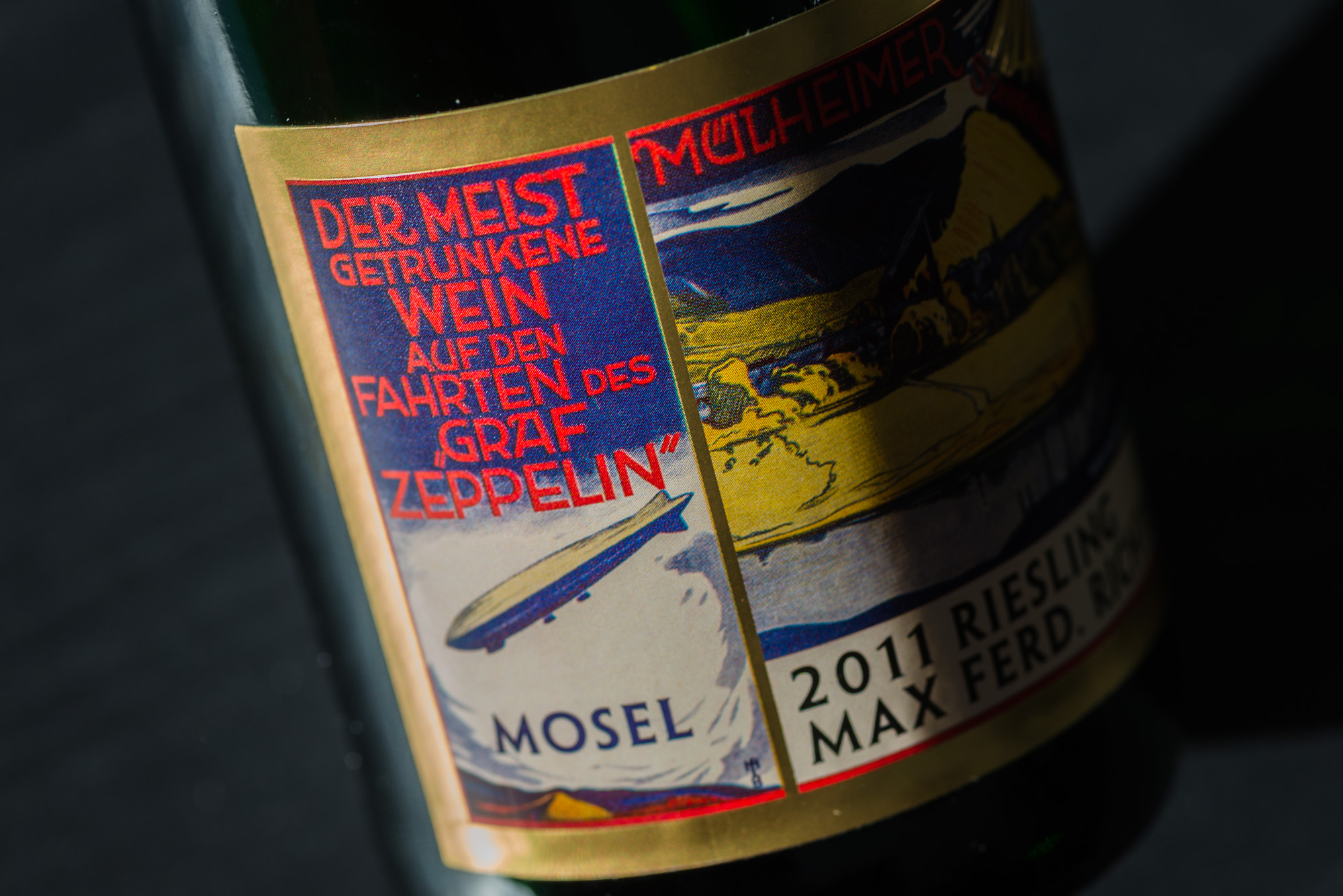
If there was a branch of wine journalism that reviewed wines on the merits of their labels alone, then, for my money at least, the delightfully old-fashioned classics from this great Ruwer estate would be hard to beat. Now, the good news is not just that the Wine Rambler, for one, will not give up on sampling the contents of wine bottles as well.

More to the point, the good news is that the stylishness of this particular wine now before us does ample justice to the lovingly crafted quality of the packaging:

Posted by Julian 25 Mar 2011

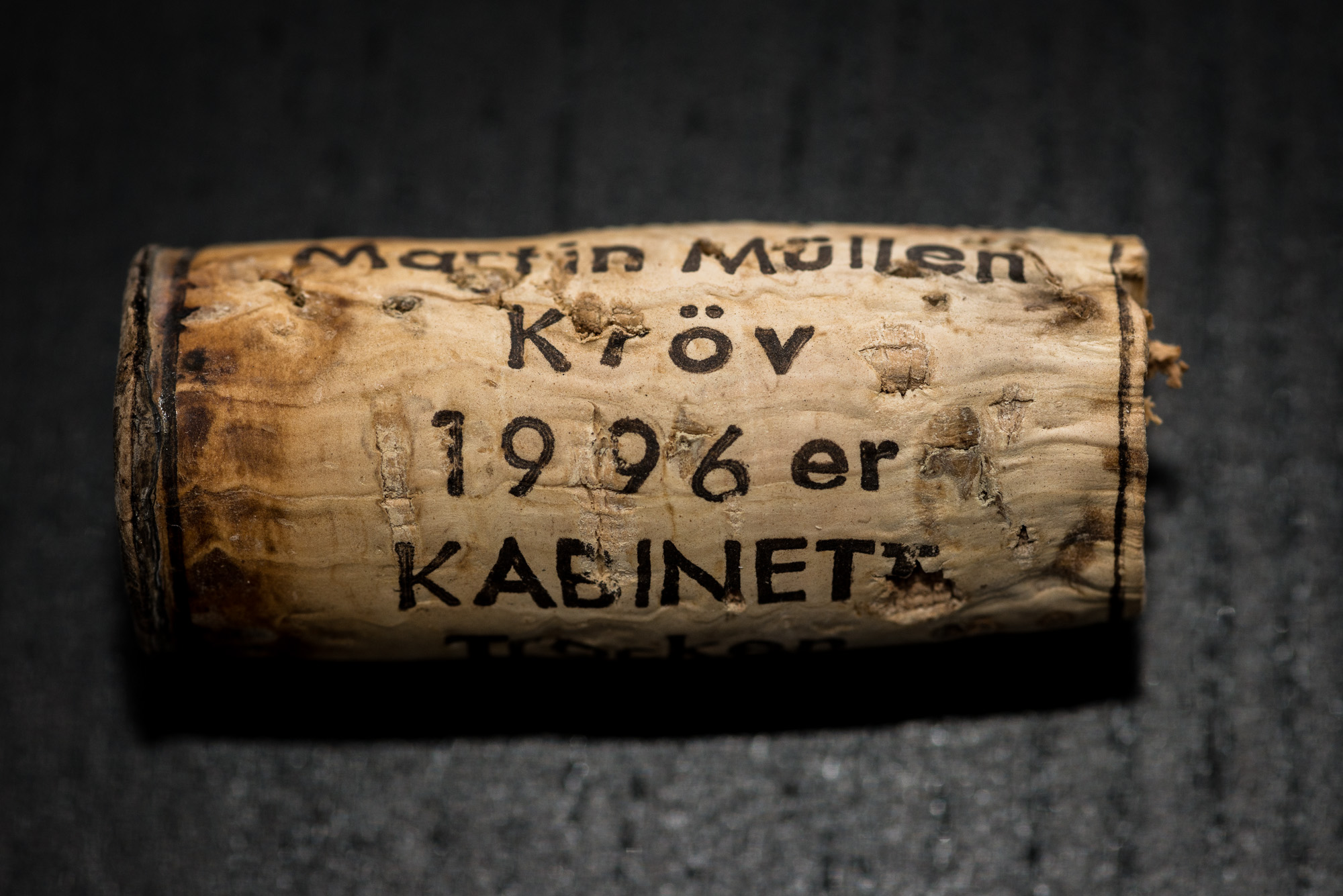
The Mosel, Germany's best known wine region, hosts many styles of Riesling winemaking: There are the modernists, there are the traditionalists, there are the ultra-traditionalist. And then, there is Jos. Christoffel Jun. The winery's website nicely underscores their brand of conservatism, in that there isn't one. If you want to get your hands on any of the older vintages (back into the 80s, rumour has it) they still have on offer, get your ass down to the Mosel. Or else get lucky on eBay, like your undeservedly fortunate correspondent. For about 12 €, shipment included, I got this Spätlese from the year Frank Zappa died.

Posted by Torsten 21 Mar 2011

Reinhard Löwenstein is a well known and, at least for some, controversial German wine figure. A communist in his youth, he is among the few writing winemakers (and not afraid to quote Marx) and also a vocal proponent of the idea of terroir in Germany. On his steep Mosel vineyards he almost exclusively grows Riesling, often substantial wines that need time to develop their potential.

I mention this because when the other day I wanted to introduce a friend to Löwenstein Riesling I only had a 2008 to hand and was a little concerned about opening the wine so early.

Posted by Torsten 10 Mar 2011

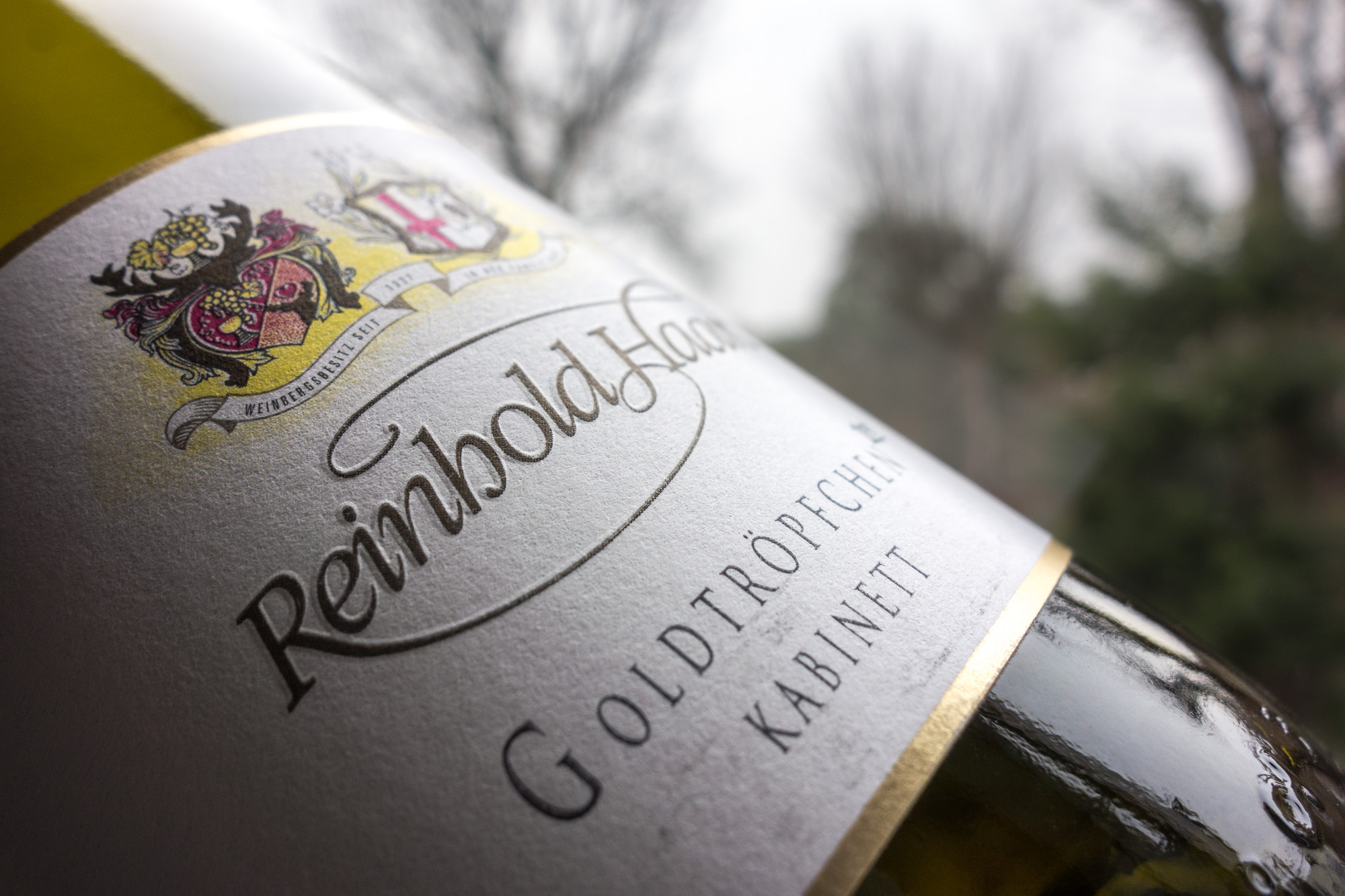
Piesport is a lovely village in the German Mosel Valley. Because of the peculiarities of the German wine law, the name can show up on the labels of very cheap wines from somewhere in the area (Piesporter Michelsberg), or it can be on first class Riesling from some of the Mosel's best vineyards. After having recently indulged myself in the delights of the supermarket wine version, it is now time to revisit the outstanding Goldtröpfchen vineyard version.

"Goldtröpfchen" means little drop of gold, and the Rieslings made by Theo Haart and family in Piesport can indeed be described as such. Today's Haart Riesling even comes with a gold capsule ("Goldkapsel"), indicating that the Haarts were particularly pleased with the quality of what went into this bottle.

Posted by Torsten 07 Mar 2011

Piesport is the name of a wine growing village in Germany. On steep hills along the Mosel, some of Germany's best Riesling is grown. "Piesporter Michelsberg", however, only indicates that the wine comes from grapes grown somewhere in the area. It is a designation no quality producer with a good vineyard there would use, so when you find it on a label you are most likely looking at a mass-produced wine that will probably not even contain grapes grown in Piesport itself.

I bought my Michelsberg for £3.99 from Sainsburys as part of a blind tasting experiment in cheap German wine. How did it fair?

Posted by Torsten 04 Feb 2011

Over the past few years I have reviewed quite a few Haart Rieslings, and for this reason I had considered scaling down for a while (with the writing, not the drinking of course) in order not to bore you. It's good I did not make it into a New Year's resolution though, as the latest Haart I opened was so stunning I honestly cannot remember having had a young Mosel late harvest Riesling of this quality.

Posted by Torsten 23 Jan 2011

A good Riesling wine of Auslese quality will usually need a few years before it really shows its potential and some of the outstanding ones may need a decade or more to get there, depending on whether you like them fruitier or a little more sophisticated. The other day, the time for Theo Haart's 2001 Auslese had come, and as it was my last bottle we will never know whether it would have been even more delightful had I waited five years more.

"Haart since 1337""Haart since 1337"

Posted by Torsten 29 Dec 2010

Seeing how good their reputation is, it was high time for us to review a wine made at the Willi Schaefer winery. The Schaefer estate is run by Willi and Christoph Schaefer, father and son, who on a few hectares of steep Mosel land exclusively grow Riesling. They feature a label design that just screams traditional Germanic Mosel style, bordering on cute cliché. I like it, of course. The family also seem to be traditional in other ways as they still don't have a website. Or they hide it. There is nothing that needs hiding about this wine though. Not only highly enjoyable on its own it also paired very well with Tim Burton's Sleepy Hollow on a cold autumn night.

It was a cold and windy night. Suffering from a somewhat congested nose, I still desired a glass of wine to keep me company while I watched Christopher Walken decapitate fat blokes in the woods. Just a little light-hearted fun, what could be better than a Mosel Kabinett?

Posted by Torsten 26 Dec 2010

Cool mineral, herbs and peach - whenever I hear these words I have to think of the bouquet of the Rieslings Theo Haart produces from grapes grown in the famous Goldtröpfchen vineyard at the Mosel. This wine is no exception, it just adds tropical fruit and a hint of citrus to the mix, plus aromas of rubber balls and a faint hint of vegetable, identified as broccoli by my friend Bethan. For a wine of Auslese quality it is still relatively young, so maybe give it some decanter love to allow it to develop properly.