eBay
It's all rather melancholy. It's raining outside, autumn is coming on, and there's only one antidote against heaviness of heart that never fails: 1990 Bordeaux. Chateau Malescasse is said to be one of the very dependable producers of the Haut-Médoc, and in a more lucid moment, I secured this bottle on eBay.

And when I woke up this morning with the rain lashing against the windows, I knew it : Tonight is its night.
Even Wine Ramblers do have a birthday. Just recently, it was the birthday of THE Wine Rambler and also of my co-Rambler Julian. My birthday is already a few months past, but there is still something to report on: When I met our Munich branch as part of my birthday celebrations, I found myself presented with a special gift.

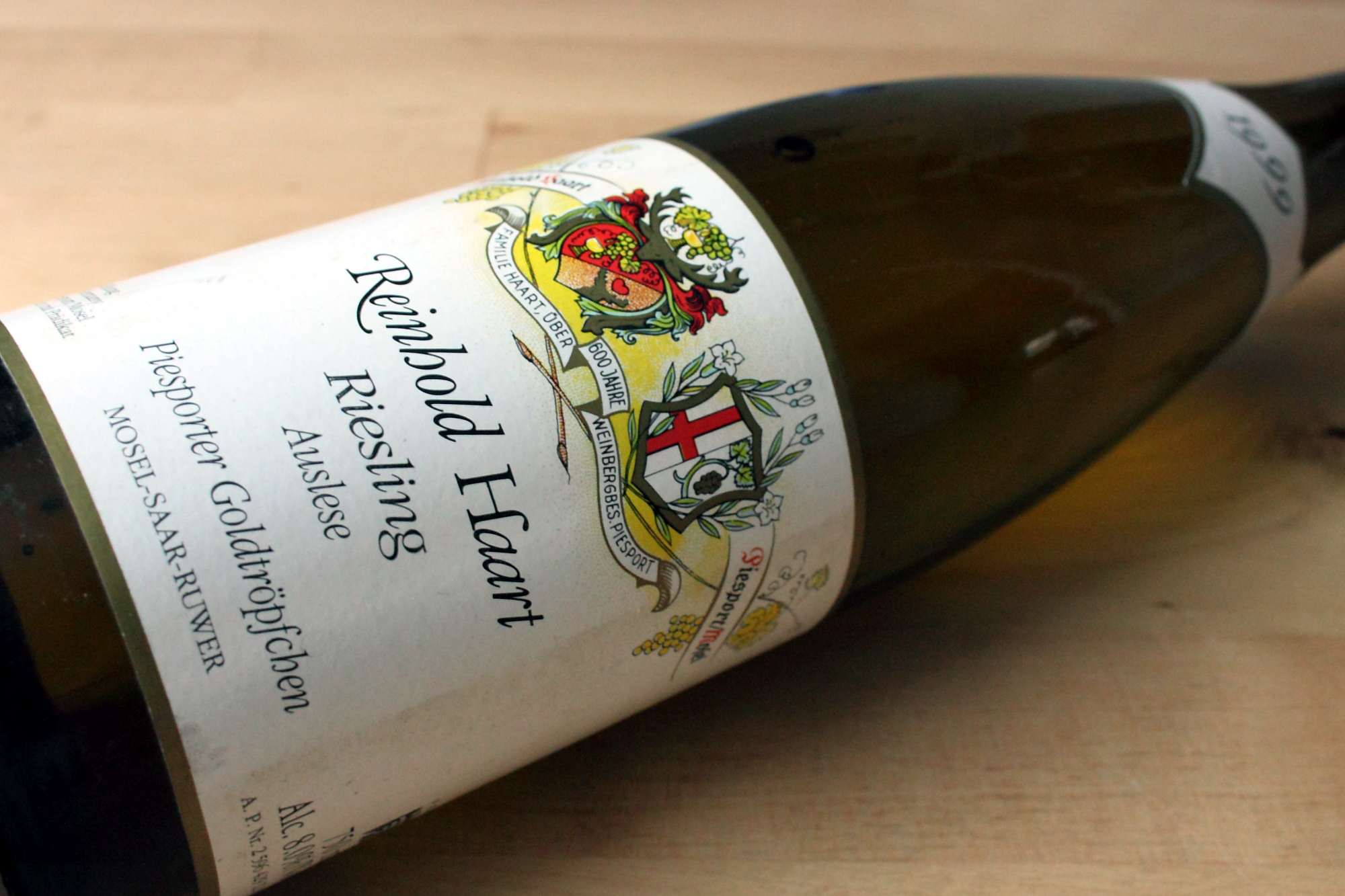
Co-Rambler Julian likes to hunt for aged wines on eBay (great if you are in Germany, imppossile in the UK because of legal restrictions), and for my birthday he managed to find a bottle of a suitably aged Riesling from a Mosel winery that has my personal seal of approval.
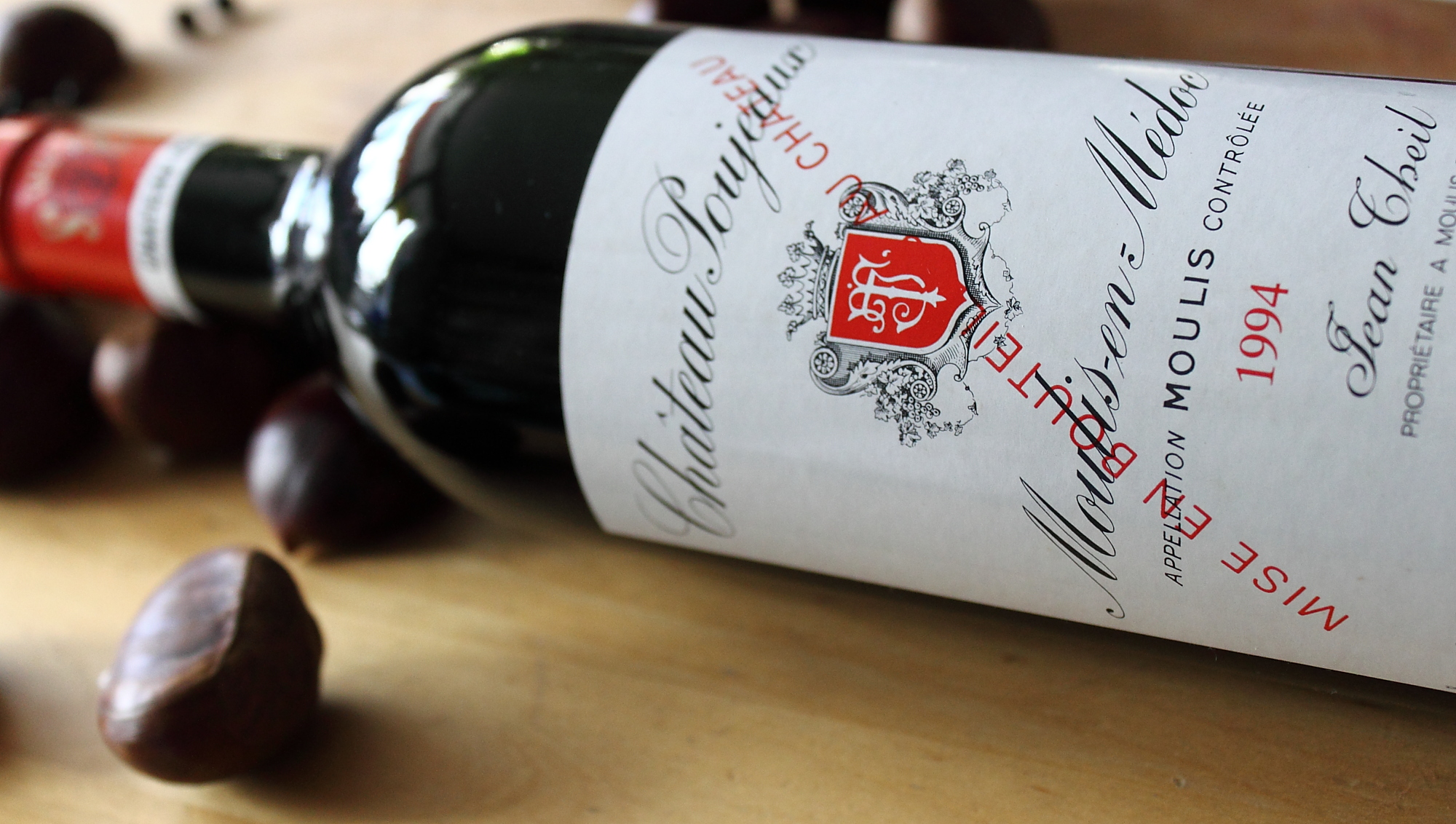
The Mosel, Germany's best known wine region, hosts many styles of Riesling winemaking: There are the modernists, there are the traditionalists, there are the ultra-traditionalist. And then, there is Jos. Christoffel Jun. The winery's website nicely underscores their brand of conservatism, in that there isn't one. If you want to get your hands on any of the older vintages (back into the 80s, rumour has it) they still have on offer, get your ass down to the Mosel. Or else get lucky on eBay, like your undeservedly fortunate correspondent. For about 12 €, shipment included, I got this Spätlese from the year Frank Zappa died.

Find the full and unabridged story of this wine, two Wine Ramblers, some chestnuts and a piece of venison in a blind tasting at a Wine Rambler full committee meeting.

My co-rambler Torsten is an emperor of efficiency, which is also the reason why the credit for the German engineering of the Wine Rambler's digital wheels and cogs, as well as its clean and orderly counter tops, belongs exclusively to him. I, in contrast, have been known to be derelict in my duties, and a number of wines that were tasted on my kitchen table during the past year never made it to the blog, mostly because I had neglected to take meaningful notes. This posting is their second chance, so it is emphatically not a collection of second-class wines, but a motley crew of high and lowly, united by one rambler's lack of organisational skill. It goes without saying that these short notes that I later worked out from memory should be taken with several grains of salt, rather than the one grain we require with our regular reviews. You'll also notice that the photography belongs to a simpler time.
Unfiltered and slightly blurry - the wine, of course, not my memory
I tried to group the wines into sections to provide some kind of thematic thread, and there'll be a little musical break halfway through in order not to make it too dreary a read. Here we go.
At the beginning of this new year, we resolved that we would try, seriously try, to understand Burgundy. We've just about let you down so far, so let's get into it without any further ado: Let's get into this bottle of Marquis d'Angerville, to be precise. One of the great names of burgundy, a second-rank vineyard (first rank would be "Grand Cru"), a vintage that should now have reached good drinking age. Should be a safe bet.

When it comes to french reds - and as I've said before, you can't be a real wine snob unless you can take a sip and say "ahh, zees, my friends, is terroir..." - I've had the distinct feeling for some time now that France is being rolled up for me from south to north. First to go was the southern Rhone. Done. I can't stand this tepid heaviness any more. Then, the more generic Languedoc blends followed suit. Bo-ring. With a lukewarm Gauby experience recently, I've even become doubtful about the Roussillon. So what about Faugères, one of the more characterful Languedoc appellations? Won't say "last try" yet, but let's just say there's some pressure on Alquier, by common agreement one of the very best names in all of southern France.

Karthäuserhofberg. Nothing demonstrates the place vineyards occupy in german wine culture like wineries that are synonymous with the vineyards that surround them. This must put some pressure on the staff, must it not? If you work at a place called Karthäuserhof and produce wine from a site that has been called Karthäuserhofberg from time out of mind, you better not screw it up. Not to worry. They never do.

Ink-coloured, almost black, smelling of plum jam, eucalyptus and donkey stable and puckering your mouth all over with overwhelmingly rough tannins, here we have a text book Tannat (note the linguistic closeness to "tannin" as well as to "tanning").

Tasted blind, and very subjectively, here.
Whenever the invitations to those '47 Petrus and '86 Lafite tastings go out, somehow our names seem to get passed over. Shame, but that doesn't stop us from embarking on the adventure that is aged wine from time to time.
Today, an 18 year-old german Pinot Noir. This ol' boy comes in a light, cloudy cherry red with brown edges. If you want to know how great decaying leaves, wet earth, manure, marinated cherries and smoked bacon smell when mixed together, I suggest you stick your nose into this. [read the full post...]
Very dark, blackish colour.
Great smell: Cassis, plums, cherry jam, tar and candied sugar.
Seems to go through two phases in the mouth, with nice sour cherry fruit, fresh acidity and coal at first, followed by subtle oak, vanilla, smoke and ash.
This more than convincing Bordeaux takes its stand between the traditional and the more accessible "international" style and actually gains complexity and tension from that. We (Mr. and Mrs. Munich Wine Rambler with two nice guests) really enjoyed this one, because it seemed to appeal to the snob as well as to the occasional drinker, without being a bland compromise.
Deep, but transparent cherry red, going brown around the edge.
Wonderful mature pinot smell, wet forest floor, plum juice, quite dense and so seductive.
Dense, but also transparent fruit, salty mineral flavours, noticeable, but by now perfectly integrated oak. It ends like a great lunch, with chocolate and coffee notes.
Excellent, a real pleasure to smell and drink.
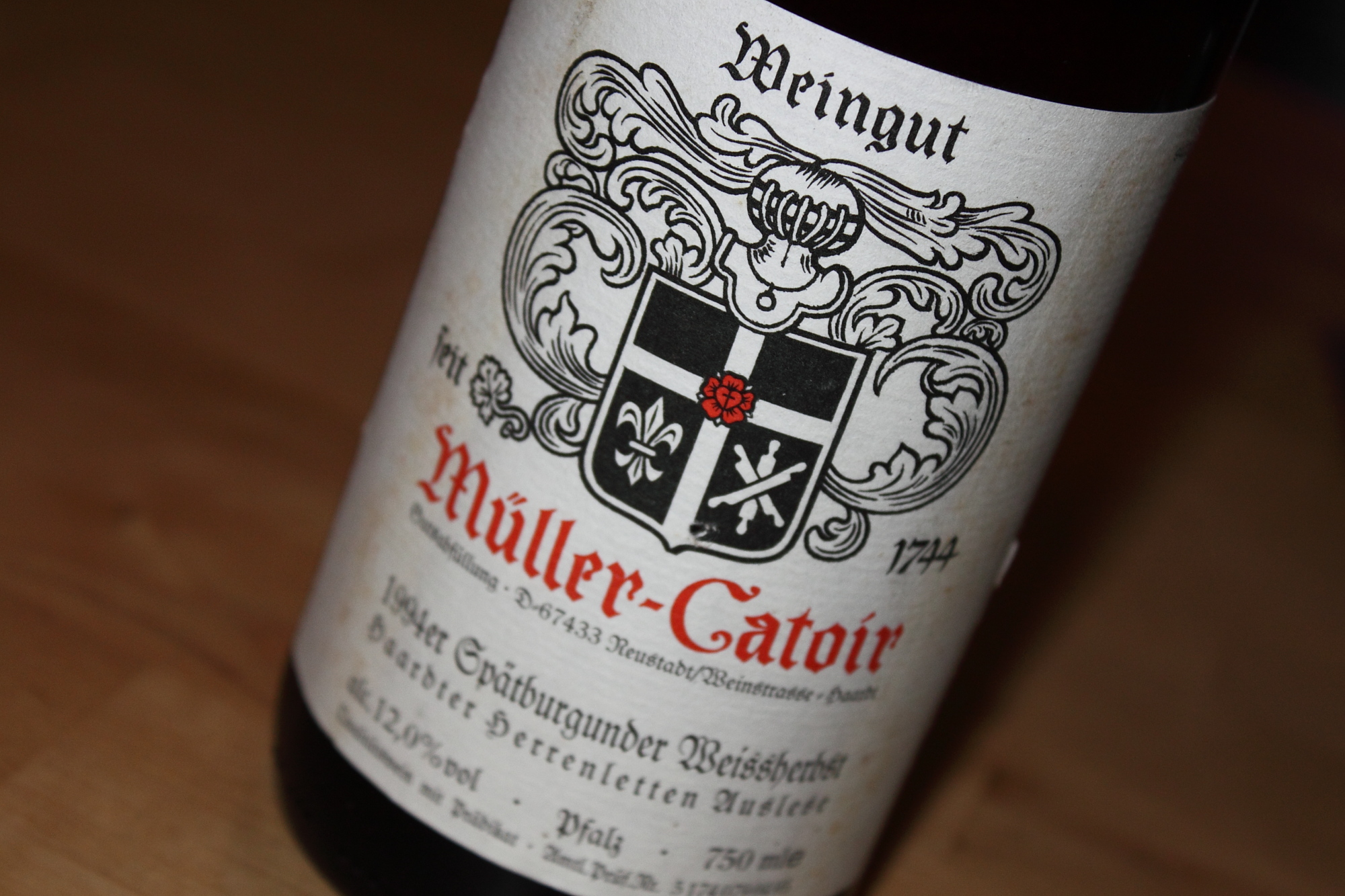
This was my second-to-last bottle, and I didn't enjoy the previous ones nearly as much. Maybe my palate is adjusting more and more to the lighter, more elegant style of Spätburgunder (possible), or else this wine has just reached the drinking age that brings out its very best (also possible, four to six years being generally a good age to drink the better german pinots at, in my humble experience).
What to write about a wine that's so annoyingly perfect that it has the peachy fruit, has the stones, has the sweetness, has the acid, has those first camomile and petrol hints of age, has the balance and has all the elegance that sweet Riesling can bring.
Not much to say about a wine which will let any of the Wine Rambler's snobbish bonmots and bad puns roll of it anyway.
I'll make this confession, then: Us having enjoyed this with a dear friend who not only makes a fiendishly good mousse au chocolat, but also likes good Spätlesen, amid general contentment, I couldn't help this thought creeping its way into my sluggish brain: This wine is too nice. Yeah, it's boring. There, I've said it.
Brick red colour, going brown on the edges.
Surprisingly wild smell, a little animal even, leather, some tar, some cocoa.
Slender-bodied in the mouth, very fresh acidity, aged cherry and plum flavours, surprisingly rough-grained, rustic tannin that has retained its sharp edge. Nice aftertaste of prunes and coffee that lingers for quite a while. [read the full post...]
No one in their right mind would open a 14.5 % wine on a hot summer evening, I know, but we had a chicken in a wonderful creamy tarragon sauce to take care of, we needed a heavy hitter, so I took a desperate gamble. It was a crazy plan, but it might just have worked...
In the nose, classic pinot blanc: honeydew melon, salted almonds, biscuit, a hint of dried herbs. In the mouth, think - and I've had time to think, tasting this on the second day - think melon again, artichokes, aloe skin cream. Now coat this mixture in white chocolate with salted pistachio pieces, and you have it - it's a meal, really. [read the full post...]
Very dark straw colour, a tinge of gold
Smells of peaches and pineapples pickled in petroleum (there's German white wine for you...), marzipan, dried herbs, and smoke. Reminded me somewhat of the more powerful Grüne Veltliners.

Great density and an oily, liqueurish mouth-feel, some maturity (camomile tea, bread), but most of all great smoky minerality. The finish of dried peaches, smoke and salted almonds is long and intense.
Surprisingly dark colour for a Pinot. Smells very ripe, black cherries, some marzipan and some smoked bacon. In the mouth well integrated, but still a tad too dominant oak, very dense and powerful, nutty, no signs of age.
Undeniably classy and powerful, this Pinot ranges between the "german" (oak, warmly nutty) and the "french" (tight acidity and tannin, cherries) style. Impressive and very yummy wine from Baden's Kaiserstuhl, but I would have liked it with a bit less oak.