2009
My fellow Wine Rambler Torsten has instructed me to stick to this blog's core concern, which is German wine, and also to be on my general best behaviour, because a few more winemakers, fellow bloggers and wine business people may look in here these days. Maybe even, nudge nudge, a couple of German wine queens. As to why that is, that will be duly revealed, much to my intense envy, in a few days' time. In the meantime, no Bordeaux, no ill-fated Burgundy projects and no wines dug out of the trash bin.

Instead, if it please your majesties, a German classic:
Willi Schaefer is one of the stars of the Mosel, so much so it seems that he and his son Christoph even in 2011 think they don't need a website so that people can find out about them. Well, they are on our radar anyway, but I am sure others would appreciate the chance to learn more about this small, family-owned estate in Graach. The wine you see in front of you is one of the basic offerings, a "feinherb" or "off-dry" Riesling that comes with a screw cap.

When I recently had two wine loving friends visiting, I pitted the Schaeffer against an off-dry Australian Riesling in another epic Wine Rambler blind tasting battle.
Why the garden, you may wonder? There is a reason for why I took this photo in the way I did, but before we come to that let me say that is is a wine for those of you who think of German wine as sweet. Why? Because despite being a not too heavy Riesling, the Natursprung only has 0.7g of residual sugar per litre. It is not quite cola zero territory, but if, after all our preaching, your are still scared of sweetness then you can rest safely knowing that even after drinking seven bottles of this you still don't reach the sugar level of a cup of tea.

And now about the green in the photo. It is not to complement the green colour on the label and foil of the wine, but to comment on the pun that went into the Riesling's name...
We have had a lot of Pinot Blanc this spring and early summer - because it is a wonderful grape, because it seems to be made for this season and because it is one of the best companions for asparagus. And especially I tend to eat a lot of asparagus when it is in season. The asparagus season is over now, of course, but that does not mean it can't still be Pinot Blanc (Weißburgunder) season!

This dry specimen comes from the Nahe valley and is made by a producer who has received a lot of praise for his Riesling over the past few years. Earlier this year, I met Tim Fröhlich at a wine tasting in London and was particularly impressed with his grand cru Rieslings. What about the entry level Pinot Blanc though?
After all the excitement of wines dug out of the garbage and superbly aged supermarket plonk (whatever next?), dare we even bother you with a simple Kabinett from the Mosel, a sweet young thing from the slopes of Erden? We do indeed and, in all modesty, I think we may have found a minor classic for you.

One to even hide away now, maybe, and in ten years' time, follow our example and write your own semi-informed little piece on what you dug out of your cellar, wardrobe or customised wine storage appliance?
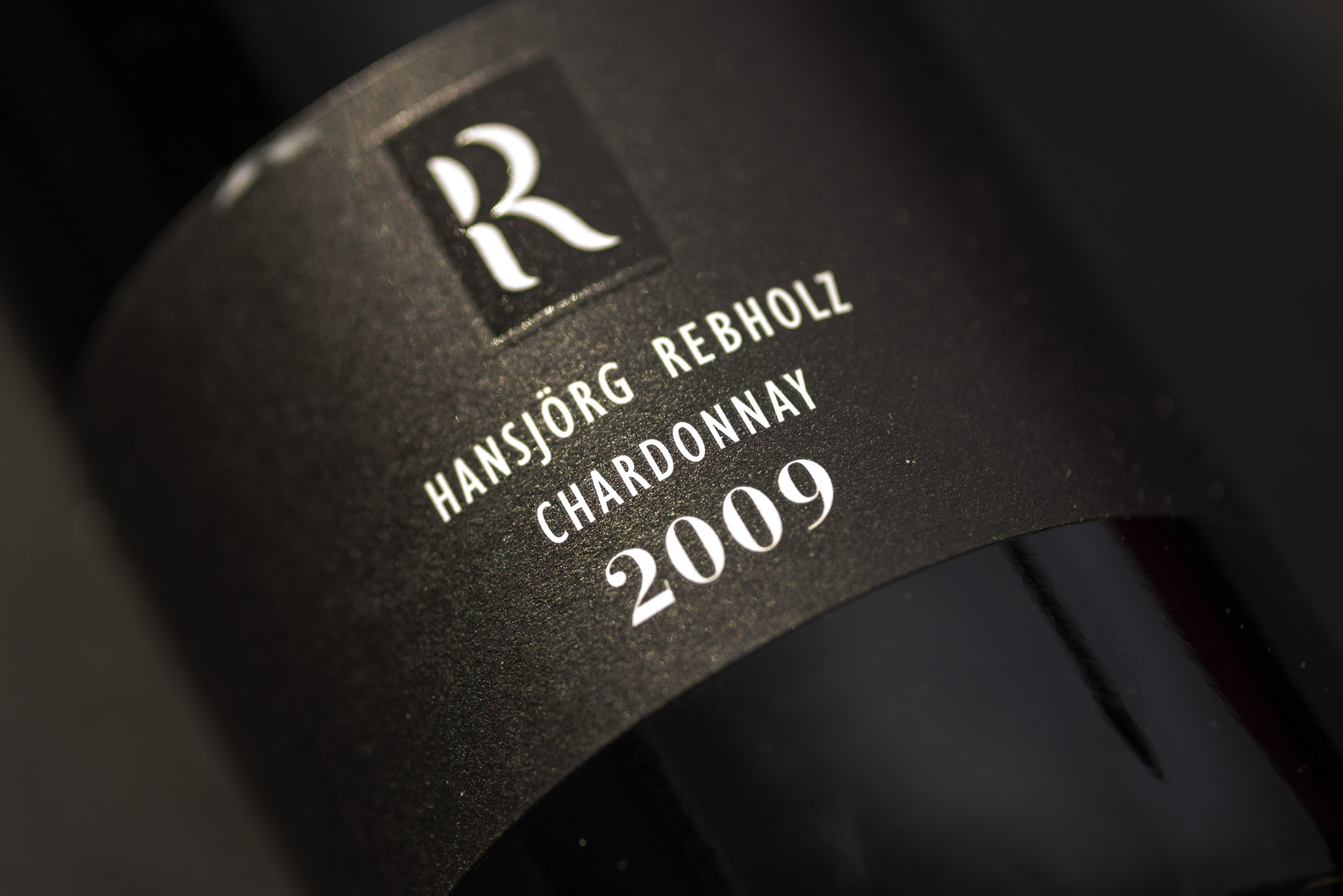
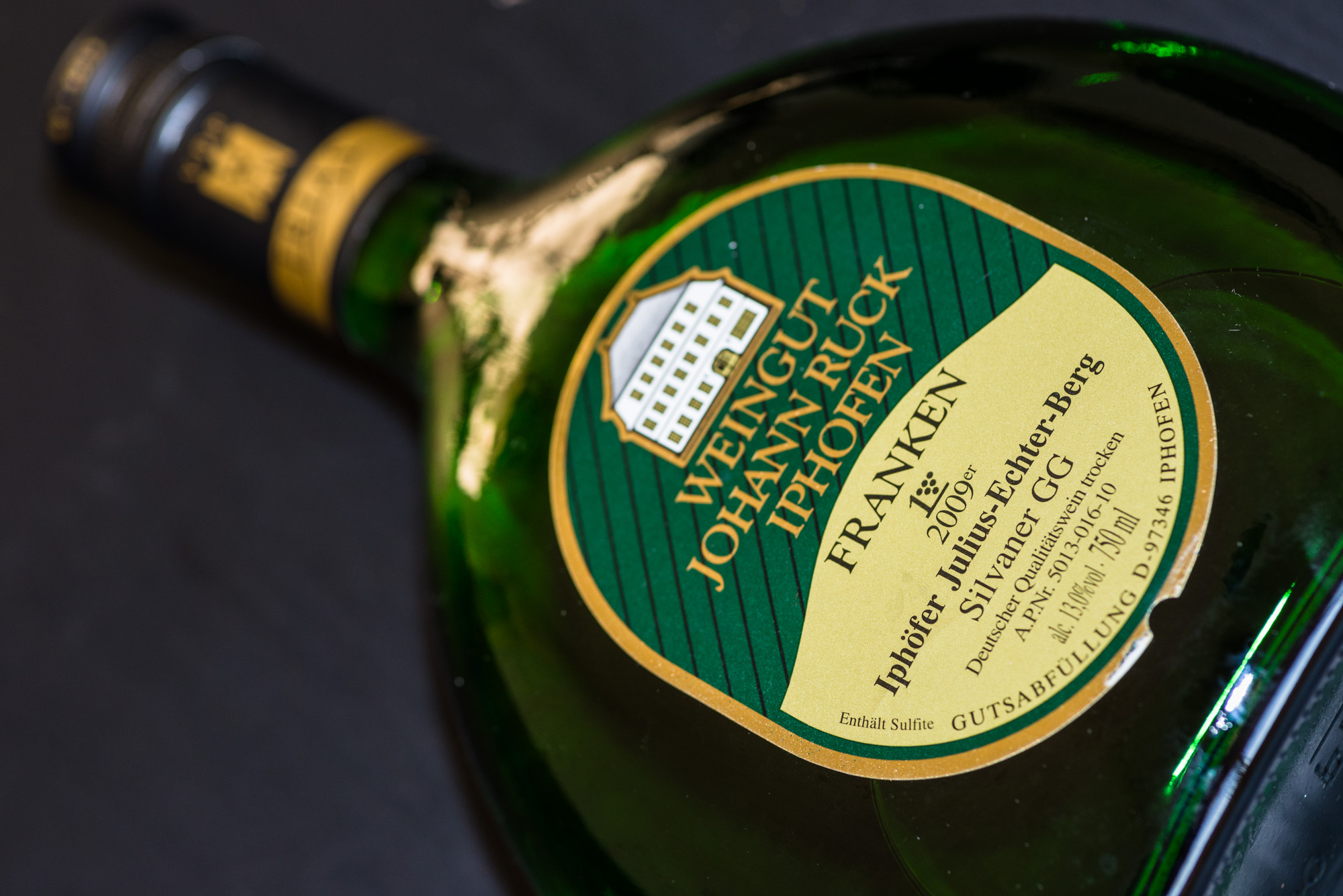
It is hard to imagine, but there are still people out there who have not heard me saying that I think Silvaner is an underrated wine that deserves more attention. Luckily, German quality producers - not only from Franken, the spiritual home of Silvaner - make this job easy and enjoyable. Today's specimen comes from the Pfalz where Hansjörg Rebholz grows Riesling, the Pinot family (Gris, Blanc, Noir) and a range of other varieties including Silvaner.

The red wines, by the way, have red labels, and the whites green ones - so I felt like photographing this one on the windowsill in the bedroom, to frame it in the greenest way possible. Before we jump into the wine (not literally, at least not in your case, I would assume) a quick comment on the perception of German wine as sweet: the Rebholz Silvaner is trocken, i.e. dry, and it seems Hansjörg Rebholz was serious about dry - less than 1g of residual sugar per litre is pretty much as dry as it gets.
It is one man in particular that every so often makes me crave American wine: Jim Clendenen, the Californian winemaker behind Au Bon Climat. The ABC Pinot Noir and Chardonnay I have tried so far were delicious and, if you consider how insanely expensive Californian wine can be, reasonably priced. As it has been a while since I had the pleasure and as I love all Pinot varieties I could not resist getting a bottle of ABC's Pinot Gris and Blanc blend.

With a label like this, impossible to imagine in France and probably even in Germany, I don't have to tell you what went into the wine, but for you lovers of more "natural" winemaking I can add that this ABC is an unfiltered organic product of spontaneous fermentation.
This spring, I discovered Beaujolais. The really astonishing thing in retrospect is how ignorant I was before I stumbled upon one, whereas you of course don't need me to tell you that good Beaujolais, high-end Beaujolais, is to cheap supermarket Beaujolais as Liebfraumilch is to great-growth Riesling. Yawn.

So I can probably keep it short: Beaujolais yummy. Chateau Cambon yummy, too?
In our quest for interesting wine, we have ventured as far east of Germany as to Georgia, but we never have explored what the German East has to offer. Now it is time to make good on one of our new year's resolutions and try a wine from Saxony. North of the 51st parallel, Sachsen is Europe's north-easternmost wine growing region, and with about 500 ha of vines it is one of Germany's smallest. A fifth of the Saxonian vineyard area belongs to the zur Lippes, one of the oldest aristocratic families of Germany.
aristocratic wine bottle cap
After the wall came down, the current prince zur Lippe, Georg, started buying back his family's property that was lost after the Second World War, and now he runs the largest privately owned winery in the German East. We had tried a few of his wines at tastings in the past, but the dry 2009 Riesling here is the first to undergo the rigorous testing at Wine Rambler HQ.
One of the venerable German wineries we have yet to introduce here on the Wine Rambler is Müller-Catoir. Established in the 18th century, the Pfalz estate has been in the same family for nine generations. There is also a generational theme about how I first came across Müller-Catoir - my dad is a big fan, and he always mentions MC when the topic of German Riesling comes up. On 20 hectares, the Catoirs are mostly growing Riesling and Pinot (Noir, Blanc and Gris), but also a range of other wines including the Germanic variety Scheurebe.
"M" - Müller-Catoir
Scheurebe is famously aromatic and often made into sweeter wines, but in Germany the trend goes to dry - as with everything -, and so I was looking forward to sampling my first dry Scheurebe in a while.
Sometimes a wine can save your life. I would assume that at least some of you will have had such an experience, but I would also assume that the number of you who had this type of encounter with an English wine may be fairly small. Since recently, I am one of them, and I would like to thank the folks from the Camel Valley vineyard in Cornwall. Yes, you have read correctly. Cornwall.
sparkling wine from Cornwall
How did Cornwall fizz save my life? The story actually begins with me saving something - the European Union.
Those of you who have ever followed up on our coverage under the no other place-tag know that we have a special thing for out-of-the-way wine growing regions. But that doesn't mean that we want people to judge these wines more benevolently because of the originality or their provenance, nor do we. What we want is emphatically both regionalism *and* quality in wine.

Staatsweingut Meersburg, owned by my beloved home state of Baden-Württemberg, has certainly delivered before on publicly guaranteed wine quality. And they also own Germany's highest elevated vineyard, the Hohentwiel Olgaberg. Named, improbably, in honour of Olga Nikolajewna Romanowa (1822-1892),a Russian princess and later queen of the kingdom of Württemberg [1], it covers the hillside of one of the cone-shaped former volcanoes of the Hegau - a landscape of great beauty and distinctiveness that slopes from the edge of the black forest down to the lake constance basin, but has not so far been able to boast of any wine growing credentials whatsoever.
After recently exploring his 09 Pinot Gris, it is now time to taste Helmut Dönnhoff's 2009 Riesling. Dönnhoff is the uncrowned winemaking king of the Nahe region and one of the (more or less crowned) archdukes of German Riesling, so I was very curious to see how his entry-level Riesling would do.

After it had been sitting in my famous wardrobe for a while, the Dönnhoff's time had come when I set out to visit one of London's secret supper clubs.
After taking a look at Pfalz wines in the last three reviews, time to bring you up to date on Germany's other bread-and-butter region, Rheinhessen. Many german wine drinkers turn there for lower-priced, everyday wines that they order in larger quantity, but don't necessarily talk about the way they would about last weekend's Großes Gewächs or the Mosel Auslese they serve at their own posh dinner party. Everybody has their place of choice - at the moment, mine is Dr. Heyden, whose workhorse wines are carefully made and very dependable, but who also overachieve significantly with their stylish and concentrated old vines-Silvaner and their truly excellent Frühburgunder. In what has become a little tradition, I have been going to see Frank Heyden behind his table at a twice-yearly wine fair in Munich for two years now, both to have a chat and to slip him a follow-up order.

Another wine that he served me there is his Chardonnay and Pinot Blanc cuvée. I liked it there and then. But how will it fare under the cruel light shone on the Wine Rambler's tasting table, where neither friendship nor enmity can hope to sway the incorruptible critic?
Sometimes you have no idea what you are looking at. The other day I pulled a bottle out of a newly arrived cask of wine that I hadn't actually ordered - nor had I heard of the winery before! Turns out that the wine merchant had sneakily squeezed it into the box as a thank you for a good customer. Herr Behringer also asked me for my opinion.

Following the recent debate on neutrality of wine bloggers I should probably add that this is the first wine we have received from Behringer without paying, that he did not ask us for a review and that the wine is not in his portfolio (I wonder if he plans to change that though). Anyway, Mr Behringer, here goes.
Lukas Krauß, friend of and contributor to the Wine Rambler, insists that his Spätburgunder is a Spätburgunder, and not a Pinot Noir, by which he means to say that if you miss in it the barnyard smells, wet earth, leanness and minerality associated with Burgundy, and find yourself with plump strawberry and cherry fruit and chocolaty richness instead, that's just how it's meant to be.

Spoken like a true traditionalist of german red wine. But do we let him get away with it?
On the Wine Rambler's project to look into regional french reds from time to time, Beaujolais is an obvious, but also daring choice. Obvious, because: Who doesn't know Beaujolais? Daring, because: Who doesn't know Beaujolais is mostly thin and second-rate, to say nothing of that awful testimony to the power of marketing over taste, Beaujolais primeur.
Liberté, Egalité and Beaujolais
But let's give the defendant his fair chance to speak up for himself, shall we?
Helmut Dönnhoff is among the most accomplished German winemakers. The same wine merchants who complain about wine critic Robert Parker's bad influence on consumers will happily tell you that "their" Dönnhoff wines have received Parker's prestigious 100 point scores, while others will point to Dönnhoff putting the German region Nahe on the world wine map or rave over the Dönnhoff trademark elegance.
Grauburgunder = Pinot Gris
Dönnhoff has also been crowned as Riesling king for his fantastic dry and sweet Rieslings. Today we will have none of that superlative nonsense and instead take a look at Dönnhoff's basic Pinot Gris.
Recently, I have had a lot of cheap, in fact very cheap supermarket wine. As this experience wasn't always enjoyable, I set out to find an affordable wine available on the mass market that I could like, to show it can be done. Remembering some pleasant encounters with wines from the Chilean Cono Sur estate, I grabbed a bottle of their Pinot Noir, sold at £6.49. What can you expect from such a wine?

Making good Pinot Noir is not cheap, and if you consider taxes and duties in the UK this is a very low price. Certainly the cheapest I remember seeing around for a while.
Blue Nun is a German wine label that is very successful in the UK. Known for relatively inexpensive, off-dry wines, Blue Nun is especially marketed at younger women. I am not one of those, but in my quest to explore inexpensive German supermarket wine I have reviewed one previously (see also for details on the brand), and now it was time to brave it a second time.

I bought the 2009 Blue Nun at Sainsburys as part of a blind tasting experiment involving cheap German supermarket wines. How did the £4.29 wine fair?