dry

These wines are dry, or 'trocken' in German terminology, - either according to our palate or the classification of the winery.

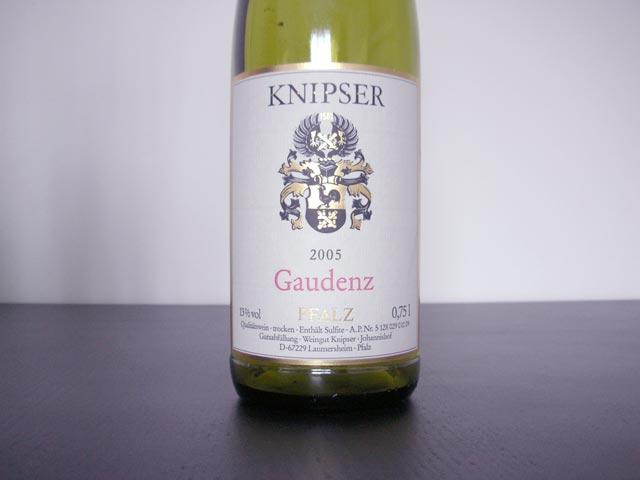
Knipser, Gaudenz 2005

If I think of a German winery that has lots of experience with blending red wines, the Knipsers come to mind. Just a little while ago I tasted their Cuvée X, a great blend of Cabernet Sauvignon/Franc and Merlot. Even though the Cuvée X can stand up to a good French Bordeaux, it is not exactly cheap either, so I was very curious to try the Gaudenz, a significantly cheaper red wine blend made by the Knipsers. In fact, it is surprisingly cheap. It also is a blend of different grapes, including the German variety of Dornfelder, and is matured in used barrique barrels for about a year.
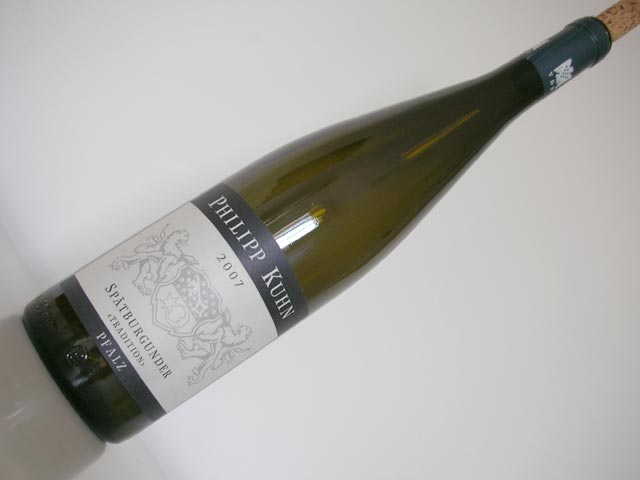
Philipp Kuhn, Spätburgunder Tradition, 2007

Again, it is back to the Pfalz, this time to take a look at the entry-level Pinot Noir from the Kuhn winery. The colour is quite dark and intense (for a German Pinot Noir), just screaming deep berry flavours. The first sniff already shows that this is not an empty promise: cherries, yeast and mushroom, but also black currant and a bit of mustard come together with leather aromas and a hint of chocolate to form a robust, but very smooth and enticing nose.

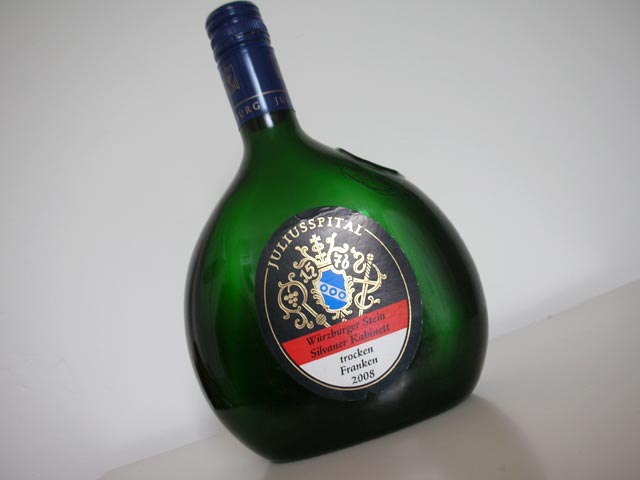
Juliusspital, Würzburger Stein, Silvaner Kabinett trocken, 2008

To the Wine Rambler, Silvaner remains one of the undervalued German grape varietals, particularly as seen from my London perspective. I don't think I have ever come across a Silvaner in a London restaurant or wine shop. This may not mean very much of course as Londoners would also find it difficult to get German Pinot Blanc or Pinot Gris, for instance, but I recently learned that even more knowledgeable wine people can confuse Silvaner with the (Austrian) Grüner Veltliner (Silvaner is sometimes called 'Grüner Silvaner'). Is this Silvaner from the Juliusspital winery going to change all that?

torsten Monday, 19/04/2010

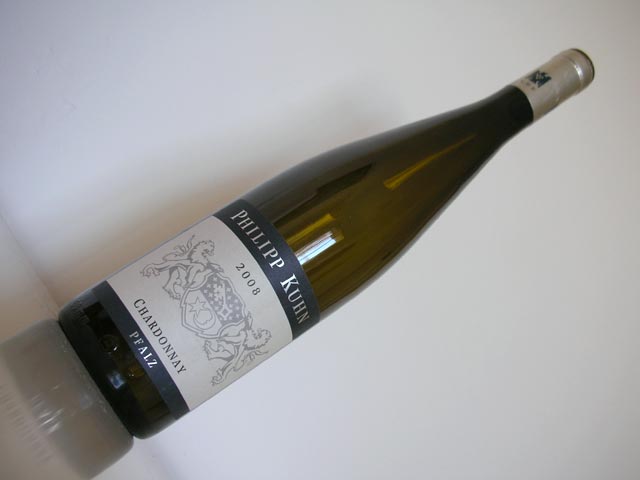
Philipp Kuhn, Chardonnay, 2008

If you are a regular reader of the Wine Rambler, you may have noticed that we do not review much Chardonnay here. Obviously, this is because we are nationalist Riesling-loving basterds from a country that does not make Chardonnay. All very true, apart from, well, Germans do actually grow Chardonnay, and not only for making sparkling wines. So the other day, when I had a few English friends over for wine and food, I opened one of those Chardonnays to remind myself how good they can be.

Palivou, Anemos white, 2008

Ripe pear, flowery meadow and some almonds in the nose. The palate is soft and round, warmly alcoholic, warm notes of hay, herbs, even a hint of minerality, certainly a pleasing lack of artificiality.

Not bad at all, I just miss a bit of a bite and a bit of a grip. I find it a little too flabby and complacent by itself, much will depend on a food pairing. A grilled fish with some herbs would obviously do a world of good when you serve the Anemos fairly cold.

Nothing to get crazy about by any means, but a nice mediterranean white. My palate is probably too Riesling-infested to see the merits of these wines, although the herbal notes did also remind me of a Grüner Veltliner from one of the warmer areas of Austria and also from a warmer year.

Emrich-Schönleber, Monzinger Frühlingsplätzchen, Riesling trocken, 2007

May the day never come when streamlined wine marketing gets rid of the german custom of labelling wines by place of origin and vineyard name. Yes, those make for clumsy label design. Yes, they are phonetically intimidating to non-german speakers. But here's their great glory: The best of them already say everything that can be said about a wine more evocatively than anything a wine marketing agency could dream up. Take "Frühlingsplätzchen", a well-known vineyard of Monzingen, in the Nahe region. This could be translated either as "the little springtime place in Monzingen", or as "the Monzingen springtime biscuit". Isn't that wonderful?

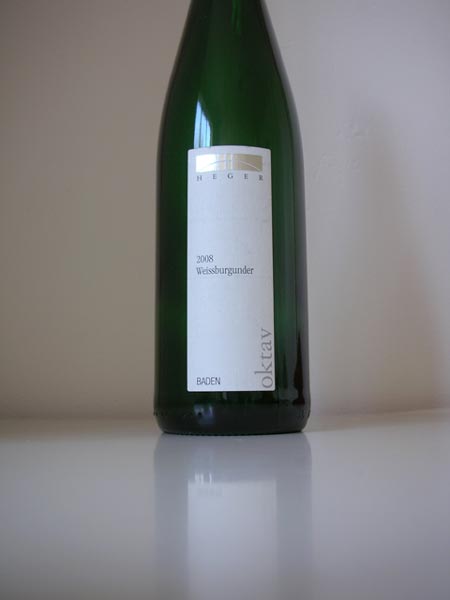
Staatsweingut Meersburg, Meersburger Chorherrnhalde, Weißburgunder trocken, 2008

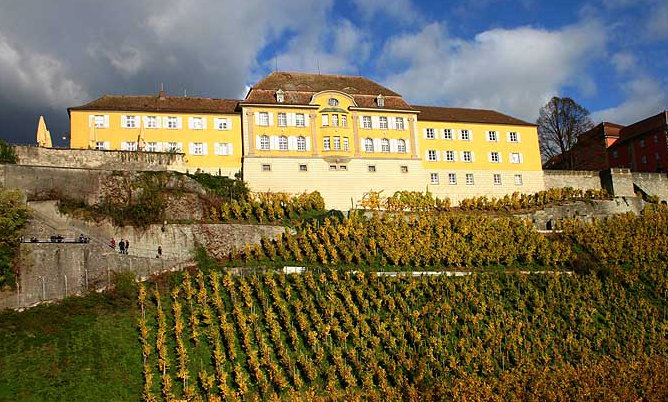
Wine produced and sold by the state? No, we're not talking about socialist eastern europe in the 1980s, we are talking the German federal Länder, who, for good historic reasons [*] own and operate large wine estates. Thus, the fine free state of Bavaria has the Staatlicher Hofkeller in Würzburg, the Land of Hessen its Staatsweingüter Kloster Eberbach. But for this time, it's Baden-Württemberg's own winery in Meersburg, Lake Constance, that makes bureaucratic beverages look good. How good? Well, here is the winery headquarters, for starters:

Knipser, Großkarlbacher Burgweg, St. Laurent trocken, 2005

Here I am, back to drinking German red wine from Rhineland-Palatinate. The St. Laurent grape is a fairly old one, possibly of French origin, that is now often associated with good old Austria, but also increasingly popular in Germany (after it had almost been forgotten there). It is probably related to Pinot Noir and often described as the little, less sophisticated, but also more powerful brother to this variety. So it is no wonder that the Knipser brothers, German red wine and barrique specialists, matured this wine in barrique barrels - for 18th months, in fact. The Knipser St. Laurent is no doubt a wine of quality. Perversely, it appears to be exactly this quality that left me with a big question mark regarding this wine. Perhaps you can help me clarify the matter?

Astrolabe, Discovery Awatere, Sauvignon Blanc 2008

Tasted blind, with surprising results, here.

Julian Thursday, 01/04/2010