dry

These wines are dry, or 'trocken' in German terminology, - either according to our palate or the classification of the winery.

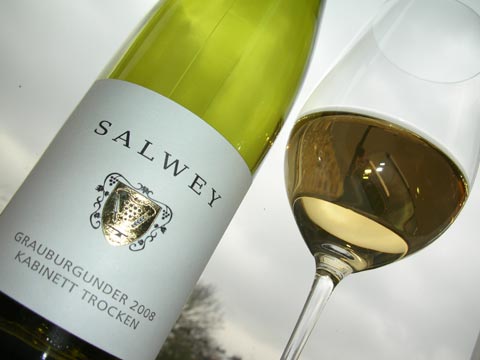
Salwey, Grauburgunder Kabinett trocken, 2008

After two years of mostly going for Riesling, I currently find myself drinking more and more Pinot, specifically Pinot Blanc and Gris. Well, surprise, this is another of those bastards, and despite being made from the same grape variety it is not exactly like your average Italian Pinot Grigio. It is Grauburgunder time, and yet again am I turning to the warm South-West of Germany, to enjoy a wine from the Kaiserstuhl region.

The first thing to notice about it is the colour. Colour is always difficult to capture well in a photograph, and this one does not quite bring across the fairly dark, gold-brown that the Salwey wine radiates. Pretty, really pretty.
Rudolf May, Retzstadter Langenberg, Silvaner Spätlese trocken "Wellenkalk", 2008

Silvaner time again. After our Silvaner appreciation campaign last year, we were not planning to keep quiet about it in 2010. But it still needed Lukas Krauß engaging defense of the grape here to put it back on the immediate menu. Based on the river Main north of Würzburg, in classic Silvaner territory, Rudolf May is making his Wine Rambler debut today (he must be so nervous...).

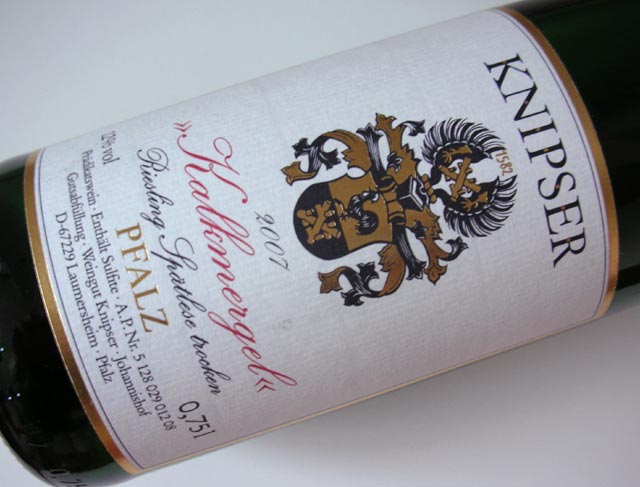
Knipser, Kalkmergel, Riesling Spätlese trocken, 2007

If you have read the Wine Rambler recently, you will have been introduced to the Knipser family as specialists for red wine - from Syrah to the Cuvée X, a blend of Cabernet Sauvignon / Franc and Merlot, the Knipser winery in Rhineland-Palatinate does it all. Among the many other grape varieties grown is Riesling, and today I have the distinct pleasure to write about a late harvest Riesling that is not only a great example of a dry, focussed white wine, but is also, I like to think, seriously good value.

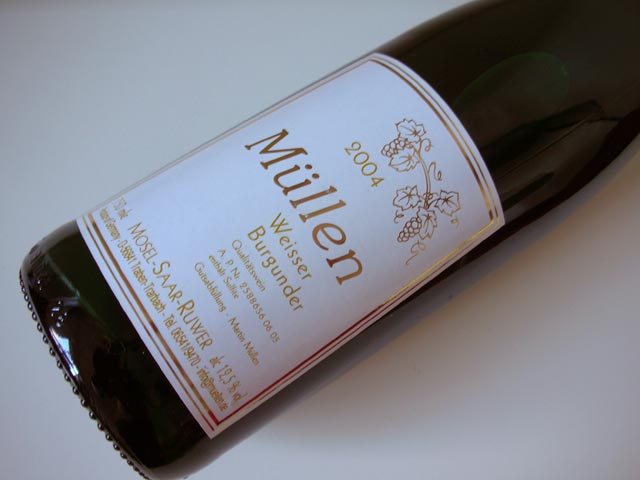
Martin Müllen, Weißer Burgunder, 2004

I cannot drink, or even think of, this wine without the memories coming back. It was a couple of years ago, and almost summer, and the Wine Rambler committee visited the Mosel. One of our stops was the village of Traben-Trarbach, where we visited the Müllen winery - and we got more than we bargained for. The full story is better to be told over a glass of Riesling, but very generous tasting samples that kept and kept and kept coming are part of it. And stories that kept and kept and kept coming. And there was a bit about a cat. We sampled many Rieslings that day, different styles too, and also a few other varieties. Among them was an impressive Pinot Blanc, a Weißburgunder, and today I opened the last bottle.

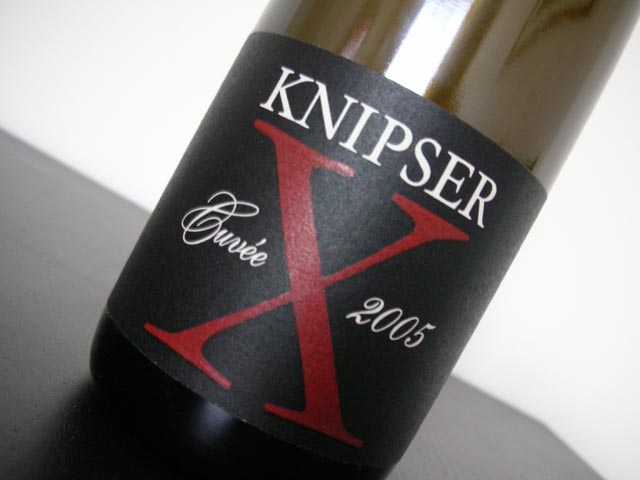
Knipser, Cuvée X, 2005

Recently we reported on a somewhat unusual German wine, a Syrah from the Pfalz. As this wine got a lot of interest, I decided it was time to open a bottle of another, unusual, red wine from the same producer. After having sampled the 2003 Syrah it was time to try the flagship wine of the Knipser winery, the Cuvée X, a blend of Cabernet Sauvignon, Cabernet Franc and Merlot - all grow in Germany, just a few miles left of the Rhine.

Salwey, Sommer Cuvée, 2008

One day it will become summer again. And when that happens you will want to drink a wine like this one here - or at least you should. The aptly named 'Sommer Cuvée' ('Sommer' being German for 'summer') is one of the basic wines of the Salwey winery. They make it from 95% Silvaner and 5% Riesling, two grapes the Wine Rambler loves. Together, they produce a light and fresh wine that is just a pleasure to drink.

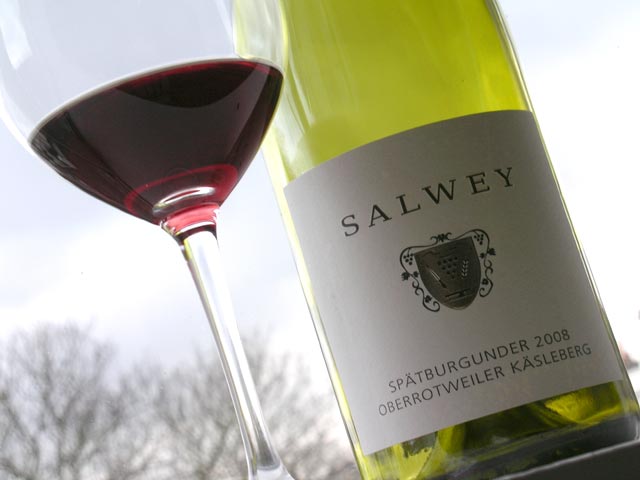
Salwey, Oberrotweiler Käsleberg, Spätburgunder 2008

It is time again to drink a Salwey wine - this time with Borough Wines and the Winesleuth as part of my mission to spread the word on German wine. Salwey is a producer I really like. Based in the hot South-West of Germany, they specialise in Pinot (Noir, Gris, Blanc), but do also demonstrate that you can make good Riesling and Chardonnay in the hot, volcanic area of the Kaiserstuhl.

This Pinot Noir comes from the Oberrotweiler Käsleberg, a terraced vineyard with loam soil that is said to produce wines that develop quickly and have an elegant note to them. Is this reflected in the Spätburgunder in front of us?

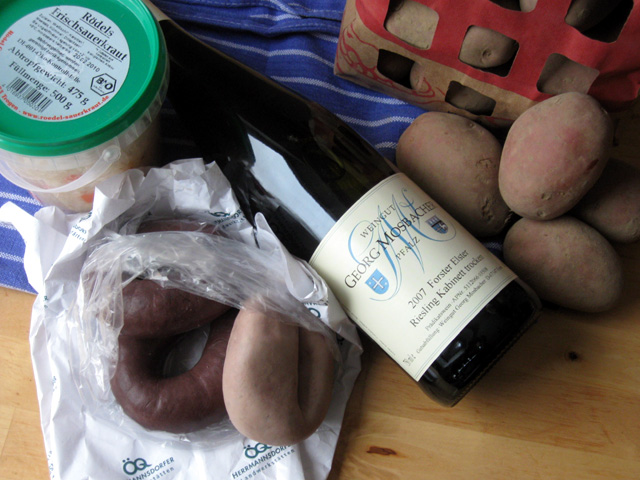
Georg Mosbacher, Forster Elster, Riesling Kabinett trocken, 2007

When german Riesling is praised for its "finest perfume of fruit supported by a lightweight frame", it would seem that its ever-delicate balance must be so fragile that it would never survive contact with heavy, savoury food. Not so. To realise what Riesling can do with Sauerkraut, black pudding and liver sausage, you need to have tasted this classic german pairing* (do not, I repeat do not, take the Wine Rambler's word for anything).
For this, you need a Riesling that is dry rather than fruity, steely rather than floral, firm rather than ethereal. You need, in short, a dry Kabinett from the Pfalz. You also need good Sauerkraut and freshly made (raw, that is) sausages, of course. In what may simply be a local tradition or may have deeper and more sinister reasons of carnivore logistics, Munich butchers offer these every Friday.

Markus Molitor, Wehlener Klosterberg, Weißburgunder *** trocken, 2005

Uncertain what you are looking at here? Somehow strangely attracted yet also confused? Doubtful whether this actually belongs on a wine blog?

If this is what you feel looking at the above picture then welcome to my world of confusion and doubt about a wine of which I am not sure if it should exist at all. What do you do with a wine clocking in at 15% alcohol? How do you feel when you realise it is a white - and from one of the coolest wine regions of a cool wine growing country? Should Mosel winemakers really do this? Should any (white) wine be so strong? Is it actually drinkable? If you want a definitive answer to these questions, please do not read on.